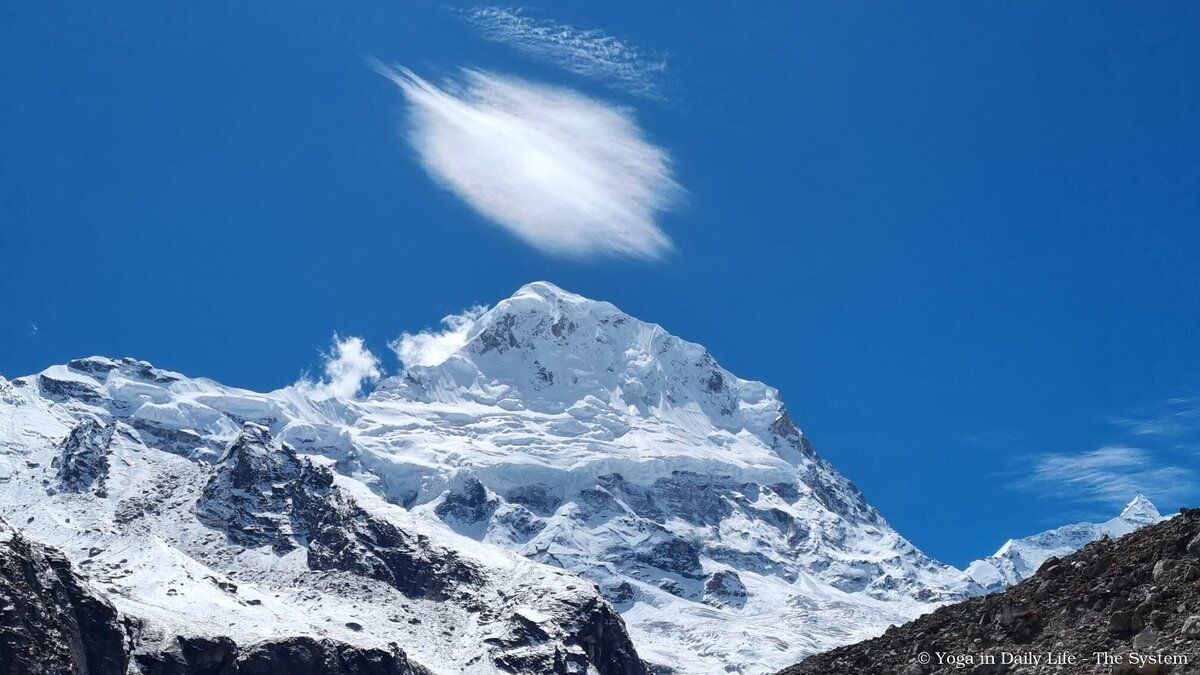
Pilgrimage to the Sacred Cave of Sri Alakhpuriji
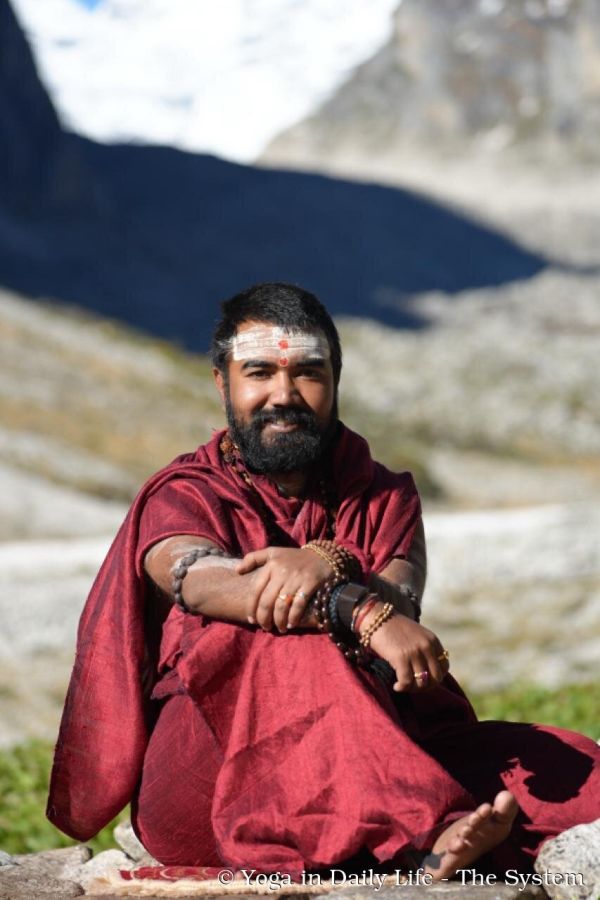
In September 2026, Param Pujya Mahamandaleshwar Swami Sri Avatar Puri Ji Maharaj led a sacred pilgrimage to the holy cave (gufa) of Sri Alakhpuriji in the Himalayas, organised by Deveshwar Travels. The journey followed the ancient paths of spiritual seekers, visiting holy places associated with the great masters of the Om Sri Alakhpuriji Siddha Peeth Parampara.
The journey brought together devotion, meditation, satsang and encounters with some of India's most revered pilgrimage sites. From the sacred banks of Mother Ganga in Rishikesh to Badrinath Dham, the legendary village of Mana, and finally, the sacred cave of Sri Alakhpuriji, each step offered an opportunity to deepen one's connection with the guru parampara and experience the profound spiritual atmosphere of the Himalayas.
Rishikesh: Prayers on the Banks of Mother Ganga
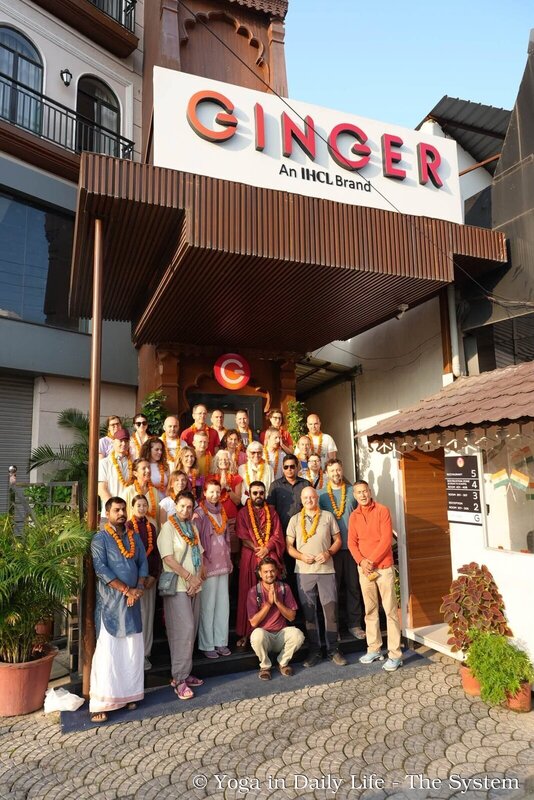
The pilgrimage began in Rishikesh, where Param Pujya Mahamandaleshwar Swami Sri Avatar Puri Ji joined the group of Yoga in Daily Life devotees from all over the world.
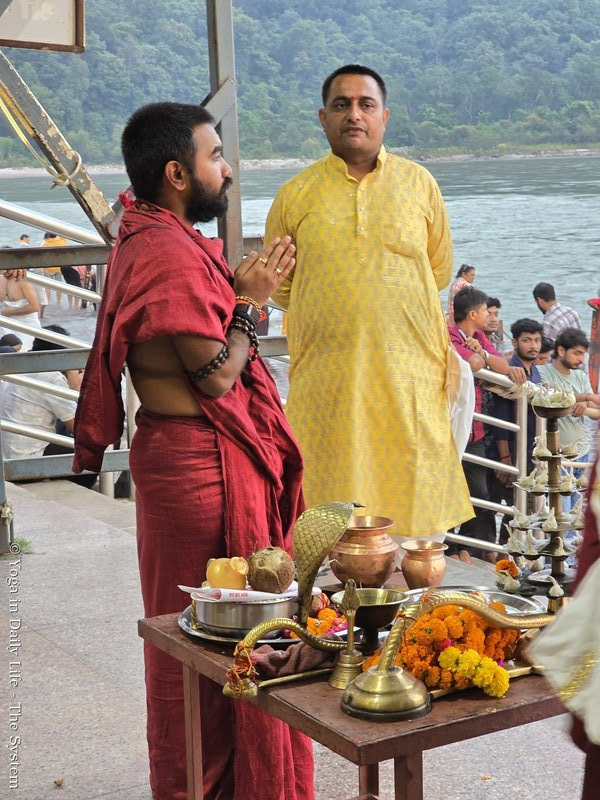
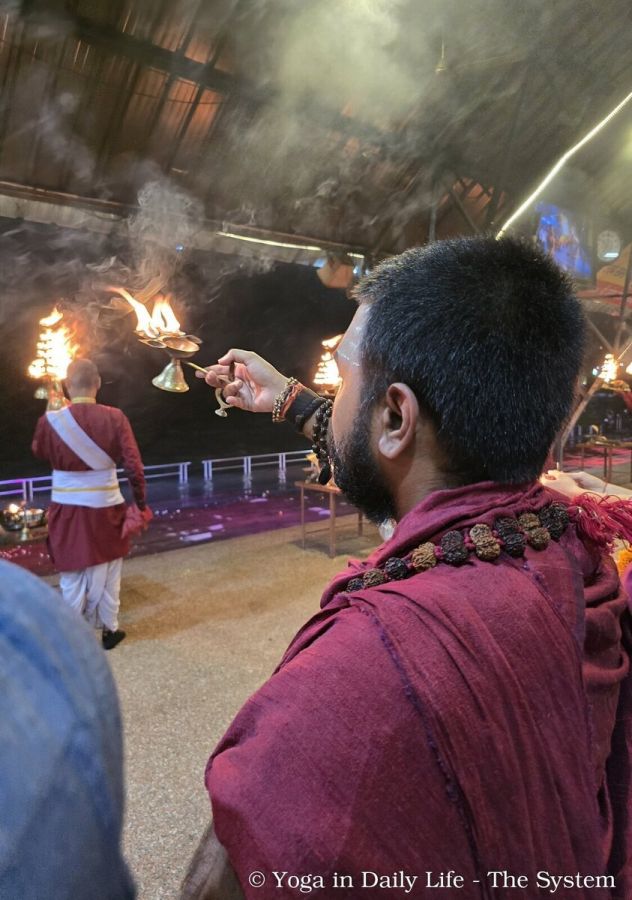
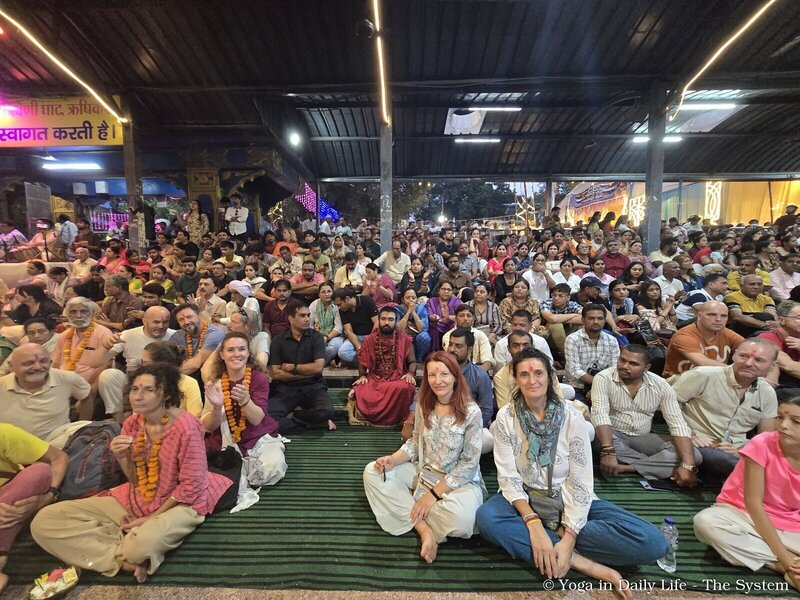
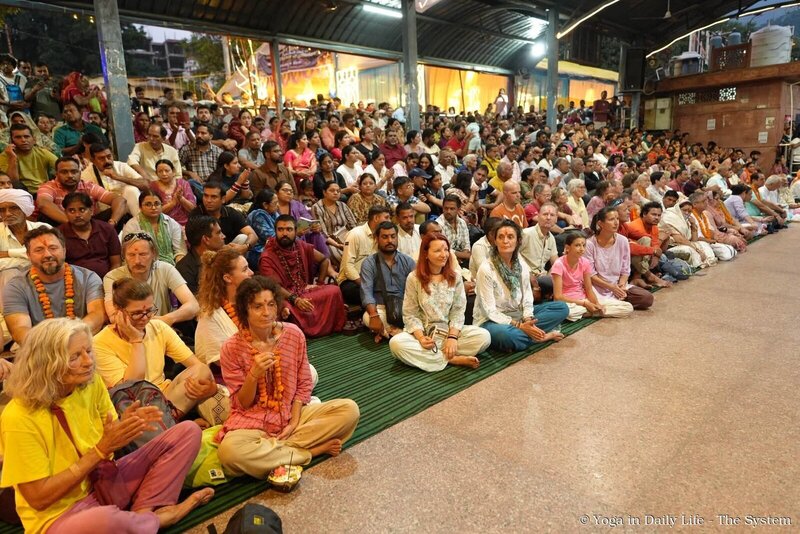
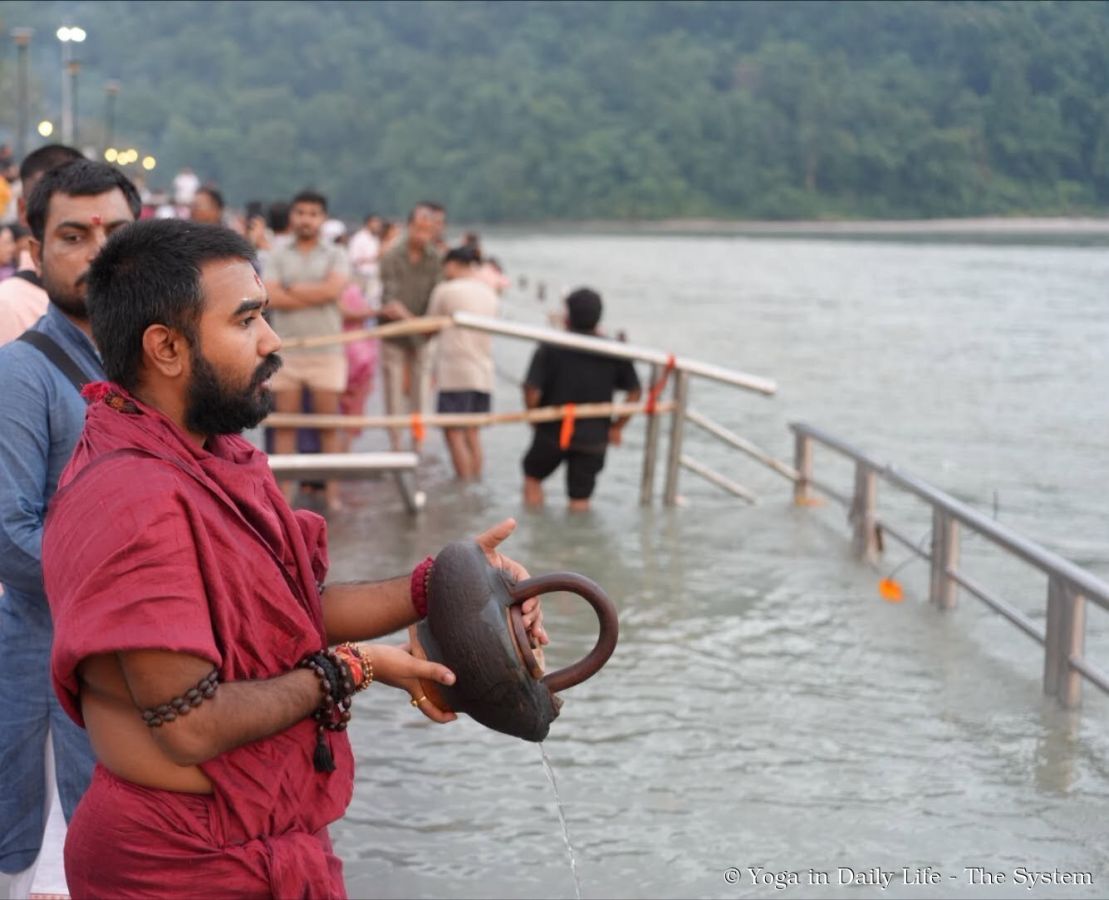
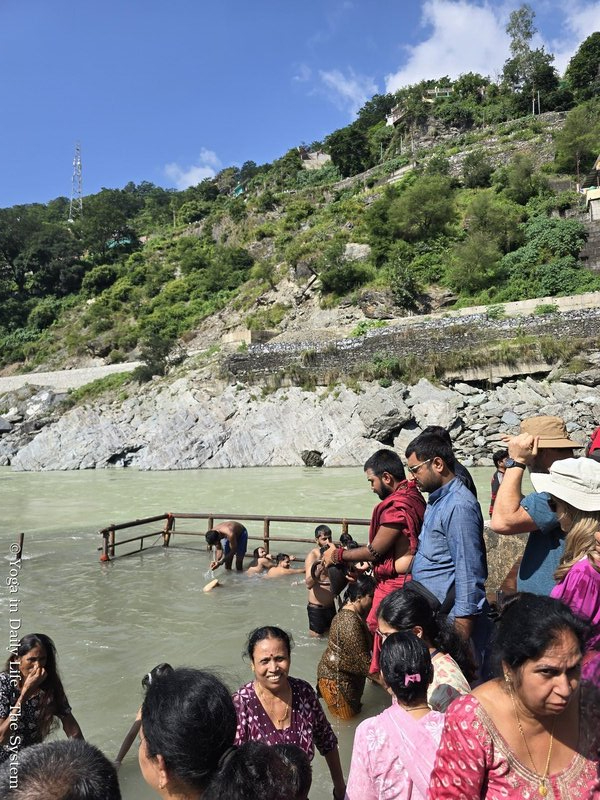
The first evening opened with Ganga Aarti at Triveni Ghat, as the sacred river was honoured with lamps, prayers and devotional songs. During the ceremony, MM Swami Sri Avatar Puri Ji offered heartfelt prayers for the good health of Sri Vishwaguruji and for peace throughout the world.
Later, seated quietly on the banks of Ganga Mata (River Ganges), MM Swami Sri Avatar Puri Ji guided the group into silent meditation. In the peaceful presence of the sacred river, the pilgrims began their journey with gratitude, devotion and inner stillness.

Joshimath: A Visit to the Uttaramnaya Shankaracharya Peeth
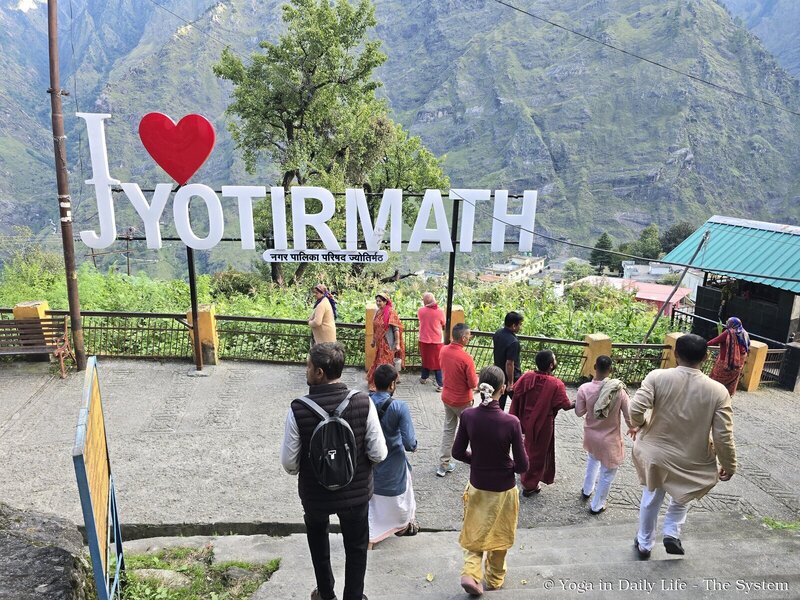
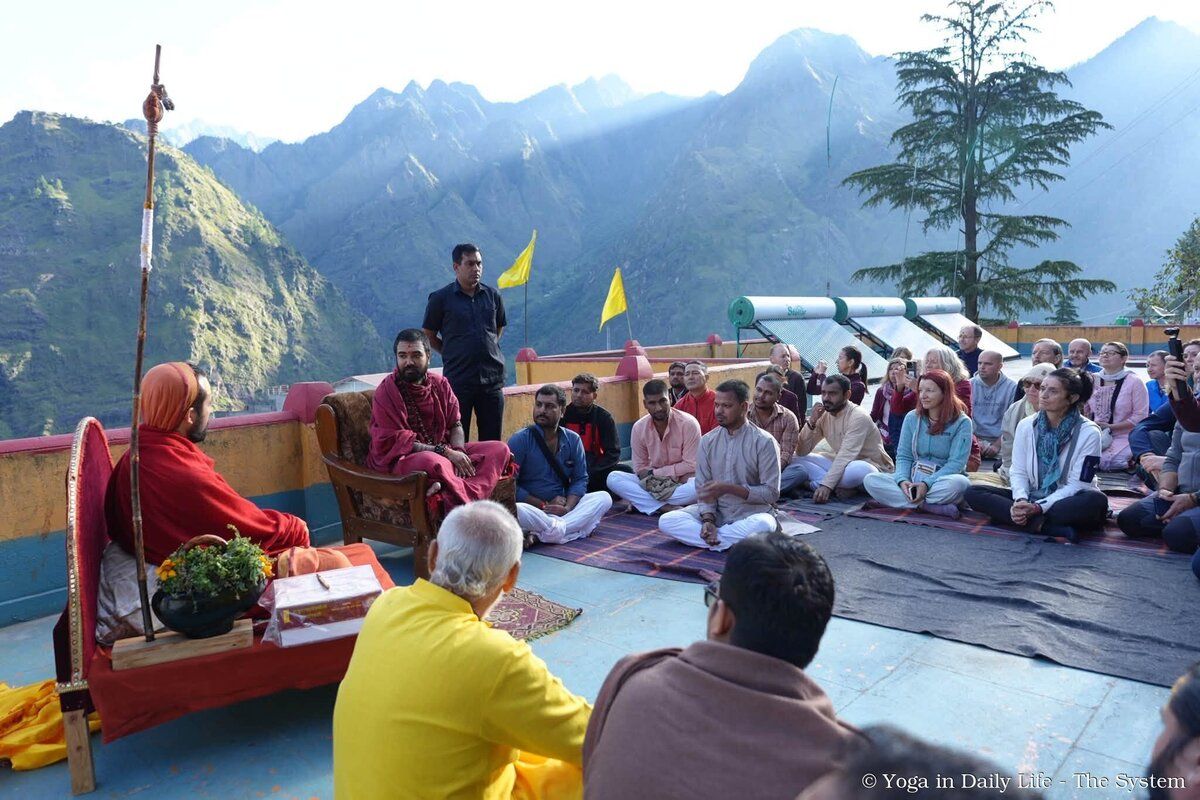
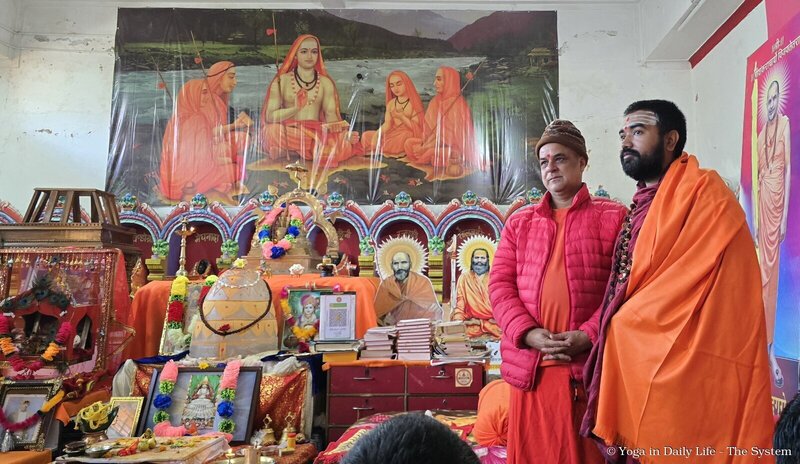
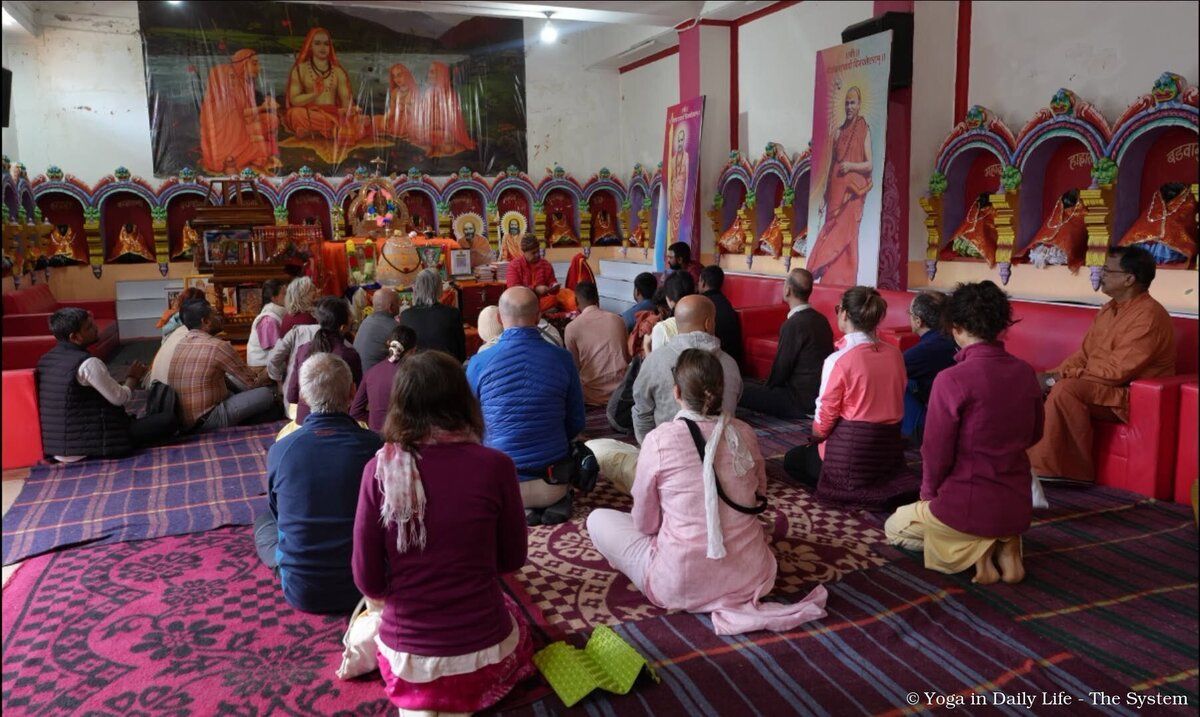
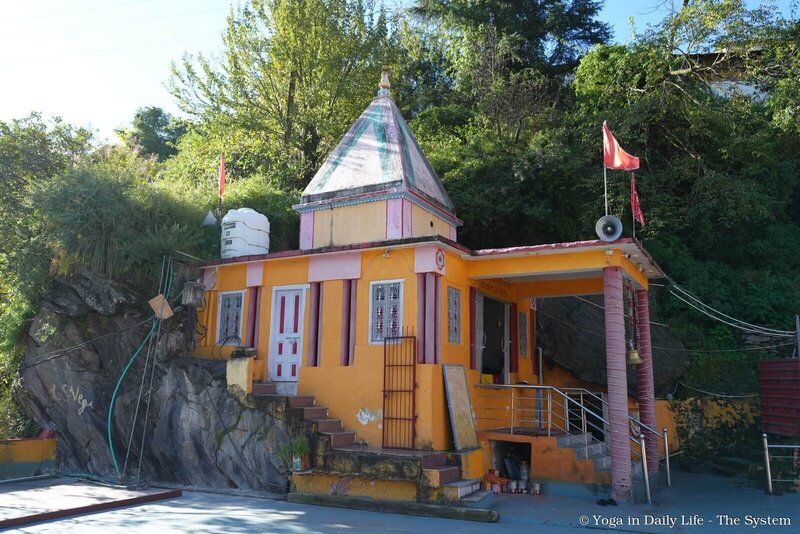
From Rishikesh, the pilgrimage continued northwards to Joshimath, one of the most important spiritual centres in the Himalayas. Here, the group visited the revered Uttaramnaya Shankaracharya Peeth, traditionally associated with Adi Shankaracharya and the Advaita Vedanta tradition.
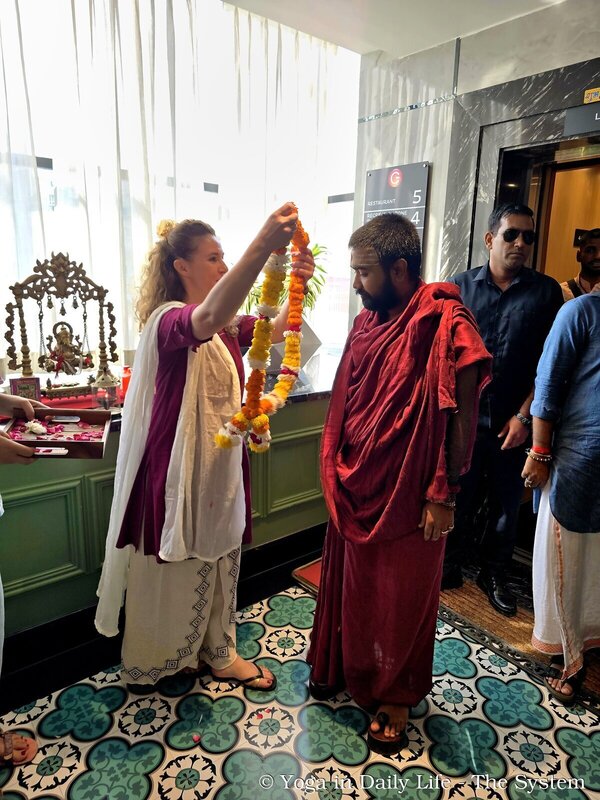
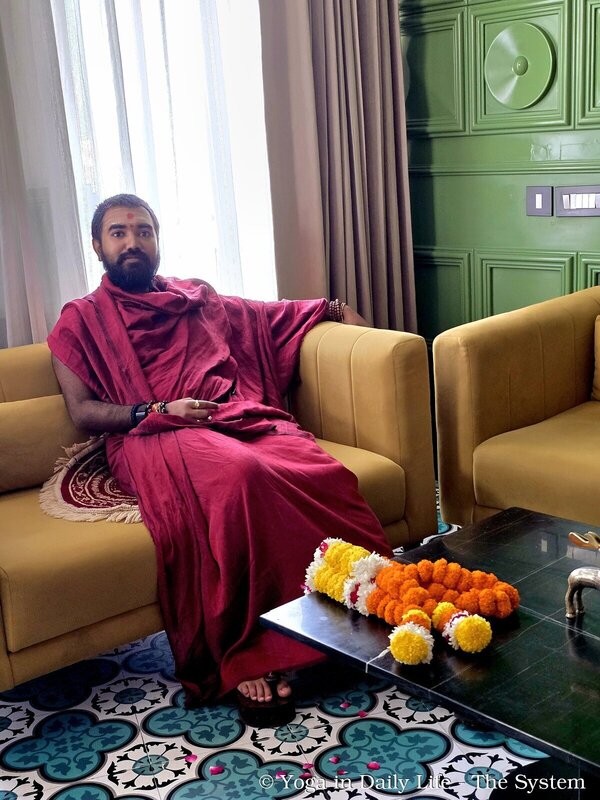
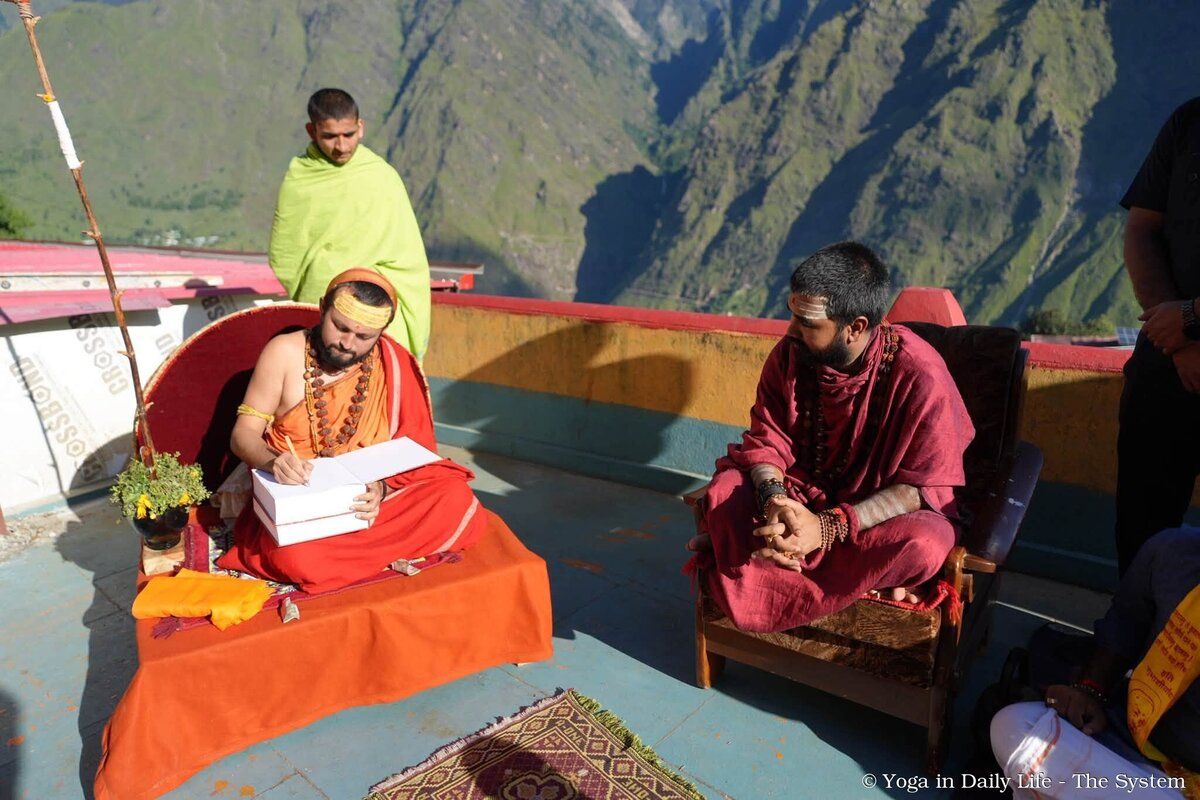
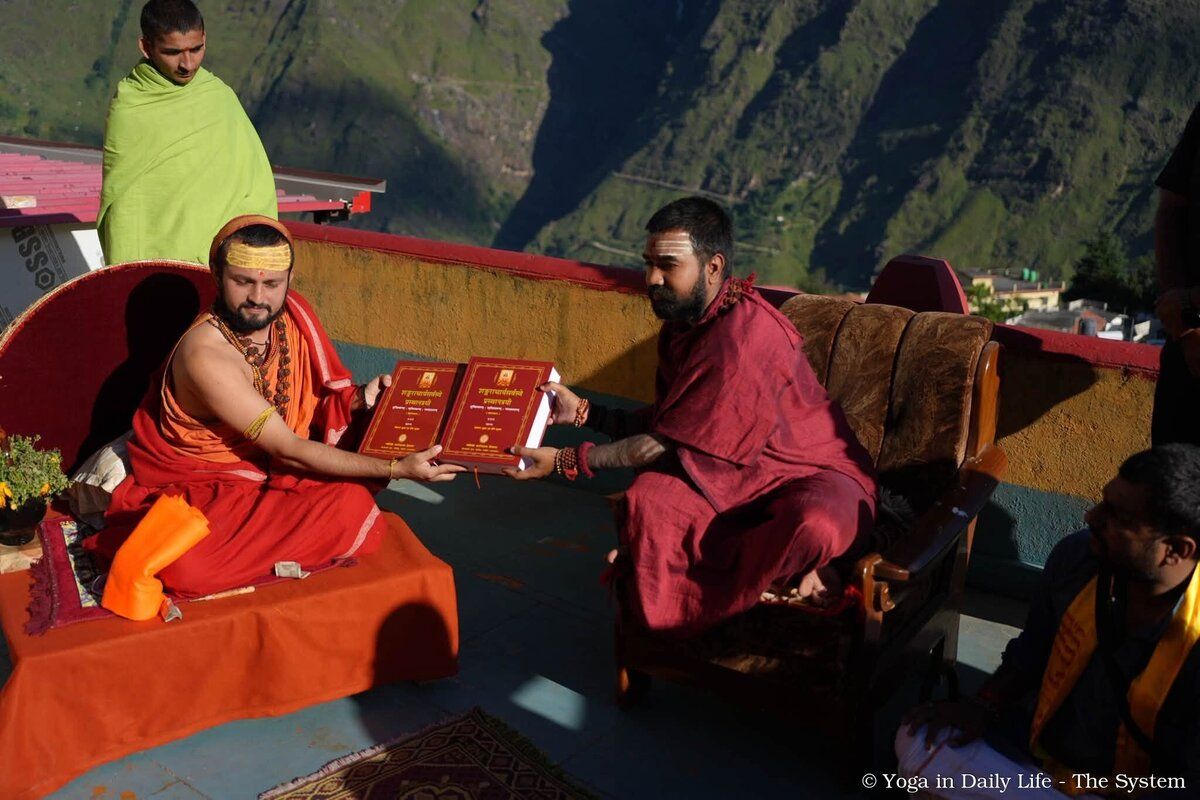
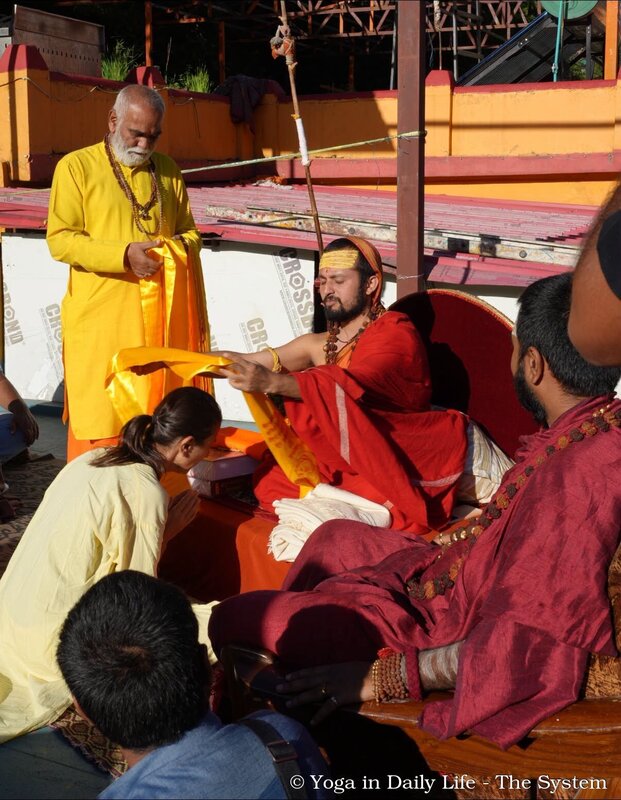
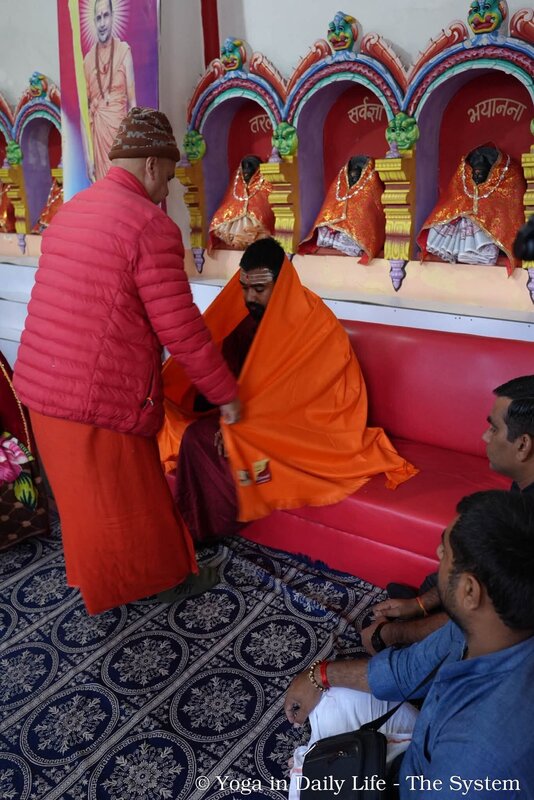
Param Pujya Mahamandaleshwar Swami Sri Avatar Puri Ji was warmly welcomed by Swami Shri Pratyakchaitanya Mukundanand Giriji, a principal disciple of Jagadguru Shankaracharya Swami Avimukteshwarananda Saraswati. As a gesture of affection and spiritual fellowship, Swami Shri Pratyakchaitanya Mukundanand Giriji presented MM Swami Sri Avatar Puri Ji with books on the Upanishads, further enriching this meaningful encounter.
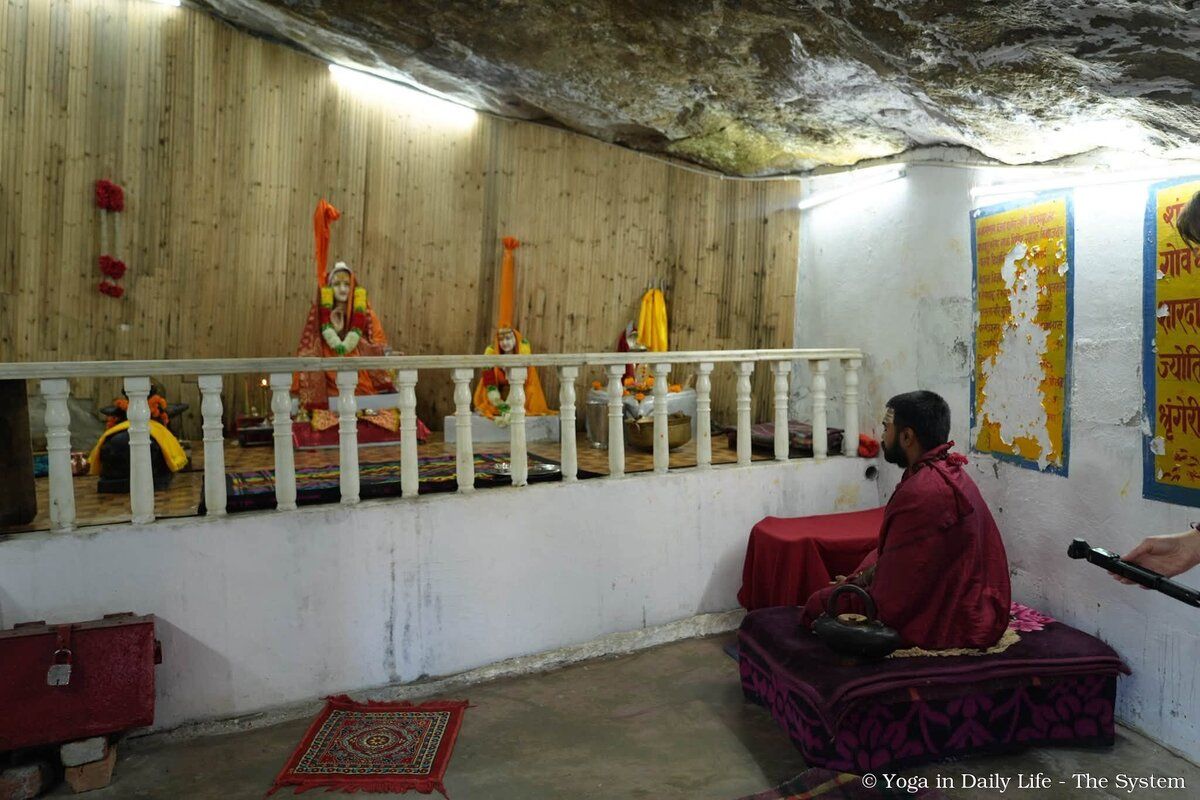
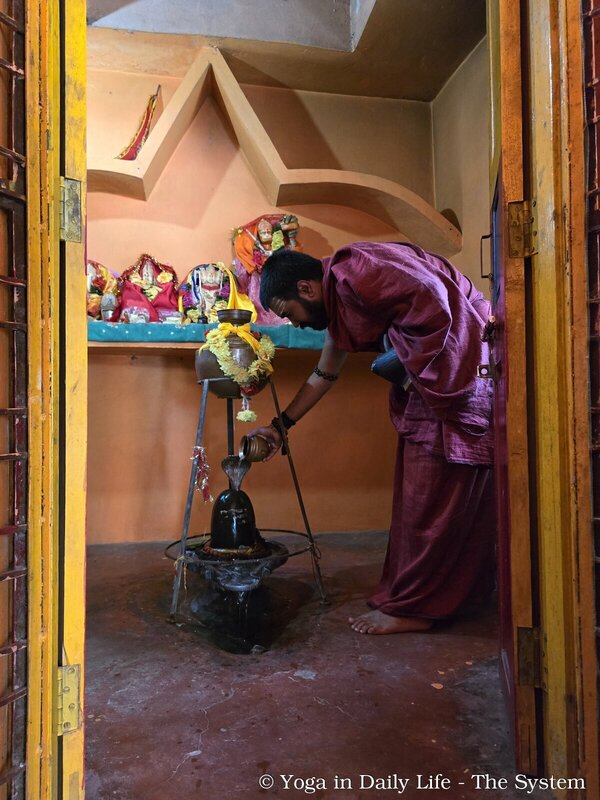
During the visit, MM Swami Sri Avatar Puri Ji had the blessed opportunity to meditate in the sacred cave of Totakacharya Ji, one of the principal disciples of Adi Shankaracharya. The quiet atmosphere of the cave offered a precious moment of contemplation in a place deeply connected with India's spiritual heritage.
Badrinath Dham
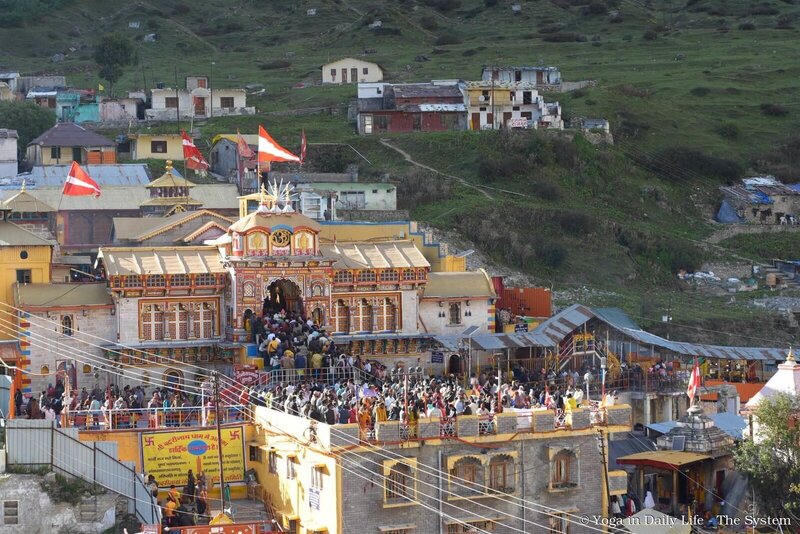
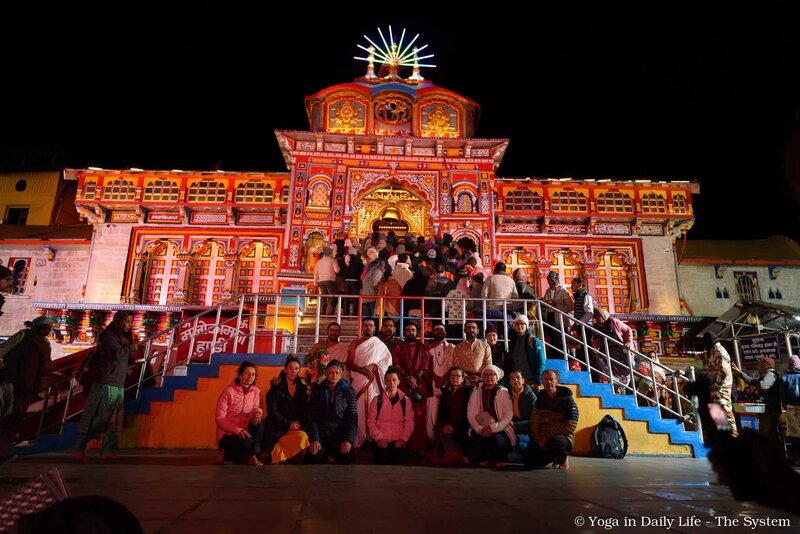
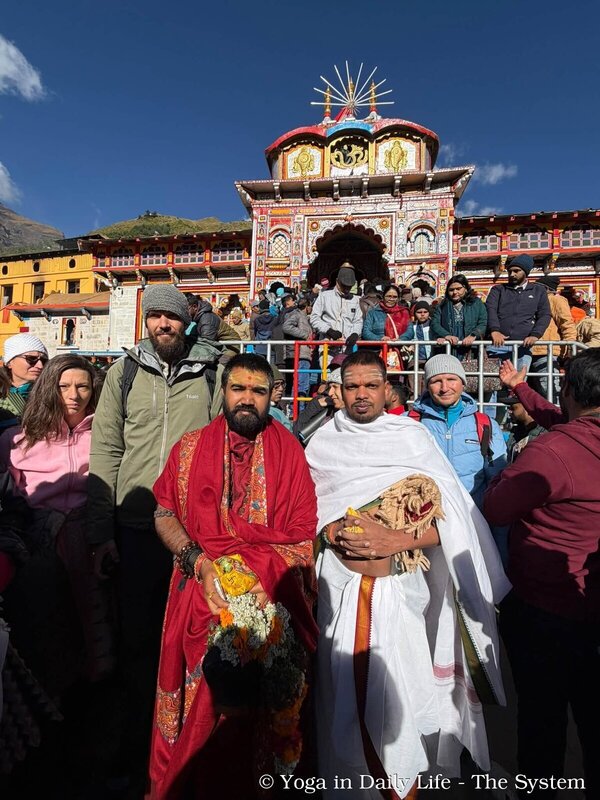
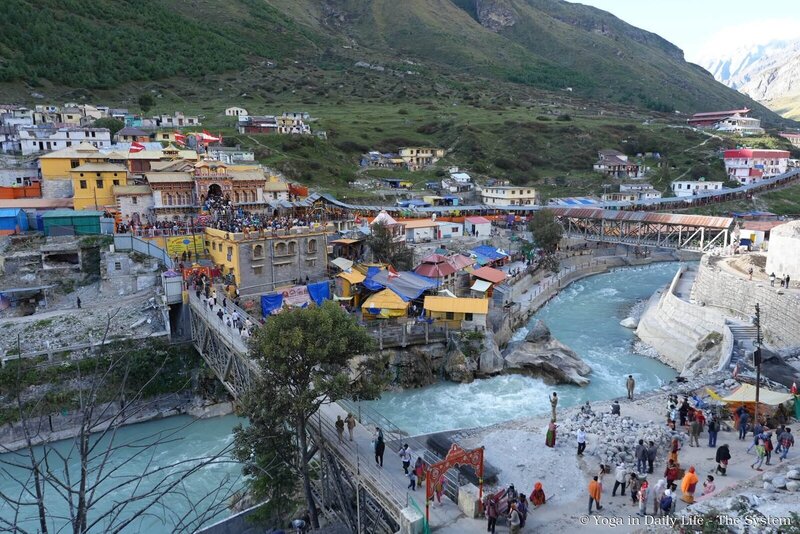
The next destination was Badrinath Dham. Situated at an elevation of approximately 3,100 metres above sea level, in the Garhwal Himalayas of Uttarakhand, the temple of Bhagwan Vishnu stands on the banks of the Alaknanda River. It is one of the four sacred destinations of the Char Dham pilgrimage.
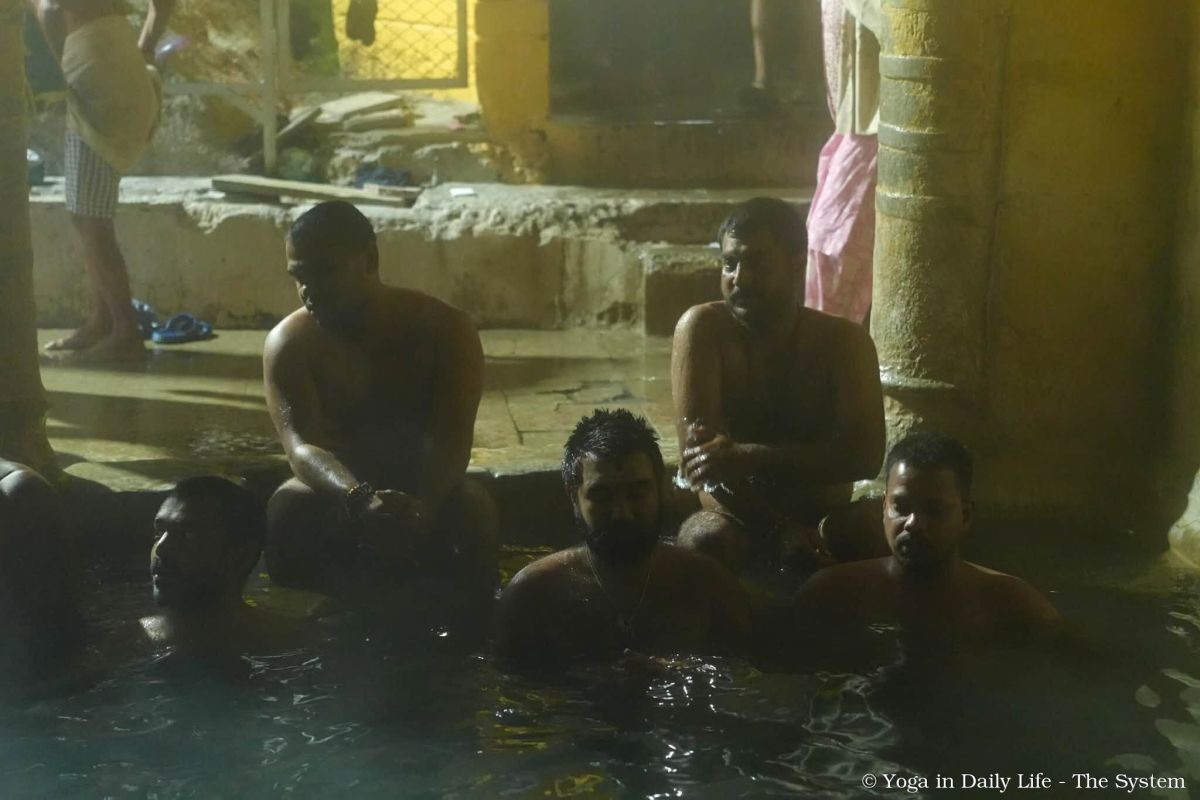
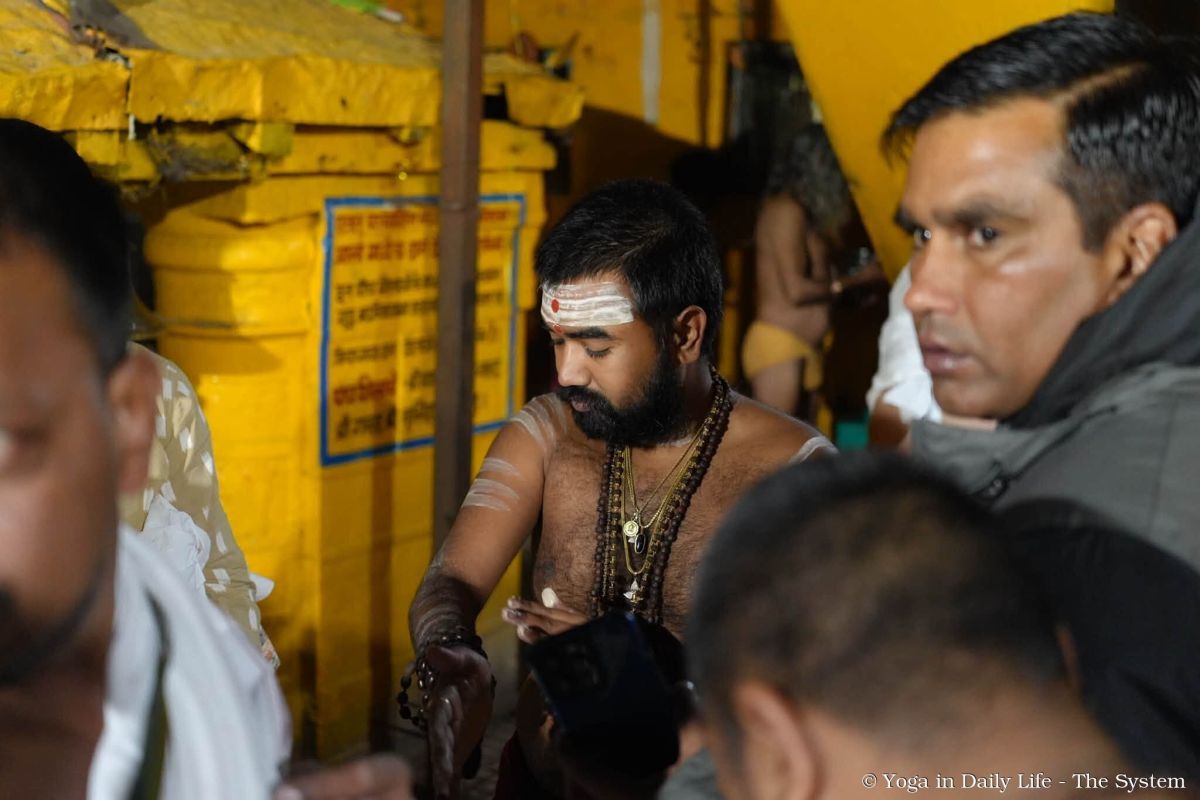
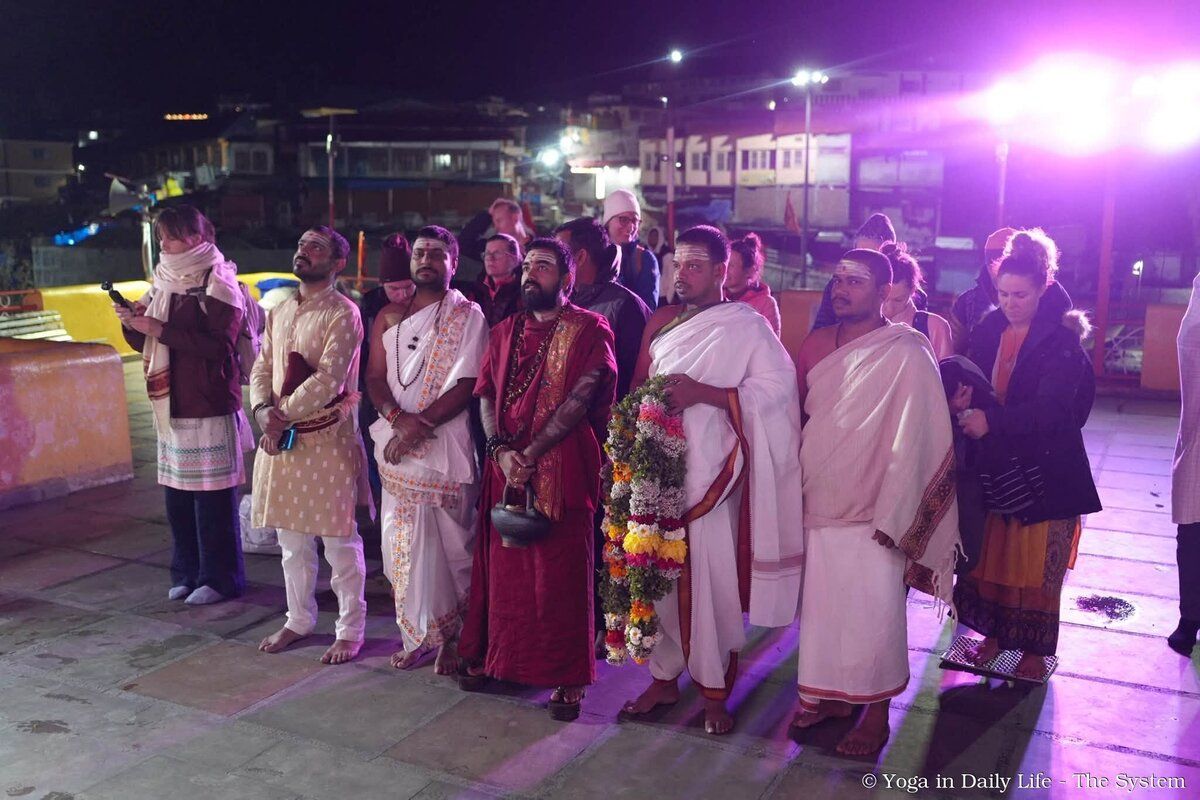
In the early hours of the morning, at around 3:30 a.m., Mahamandaleshwar Swami Sri Avatar Puri Ji took a holy dip in Tapt Kund before attending the sacred morning abhishek and receiving darshan of Bhagwan Badri Vishal. Tapt Kund is a natural hot spring traditionally regarded as a place of purification. It is said that the sacred fire deity, Agni Dev resides in its waters, which hovers around 45-55°C, making it a rare geothermal wonder at such a high altitude. Even in the freezing winters of Badrinath, Tapt Kund never turns cold. Legends say that Lord Vishnu himself bathed in Tapt Kund before taking his divine form in Badrinath Temple. This is why devotees follow the same practice – to purify themselves before entering the temple.
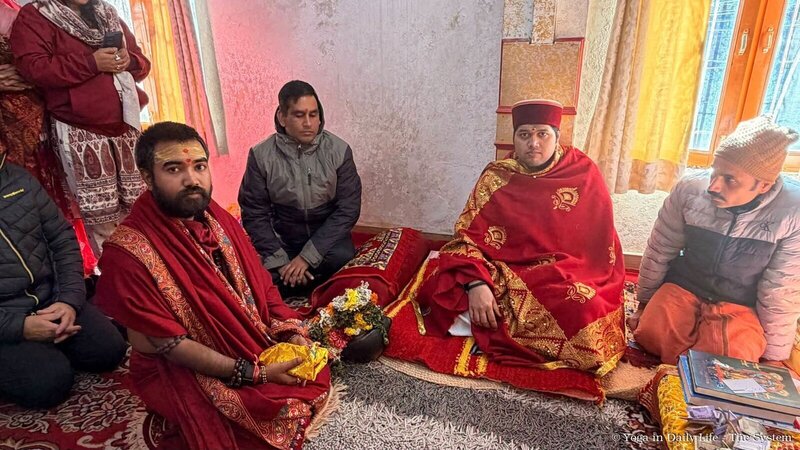
During the visit, MM Swami Sri Avatar Puri Ji also met with Rawal Ji, the chief priest of Badrinath Temple.
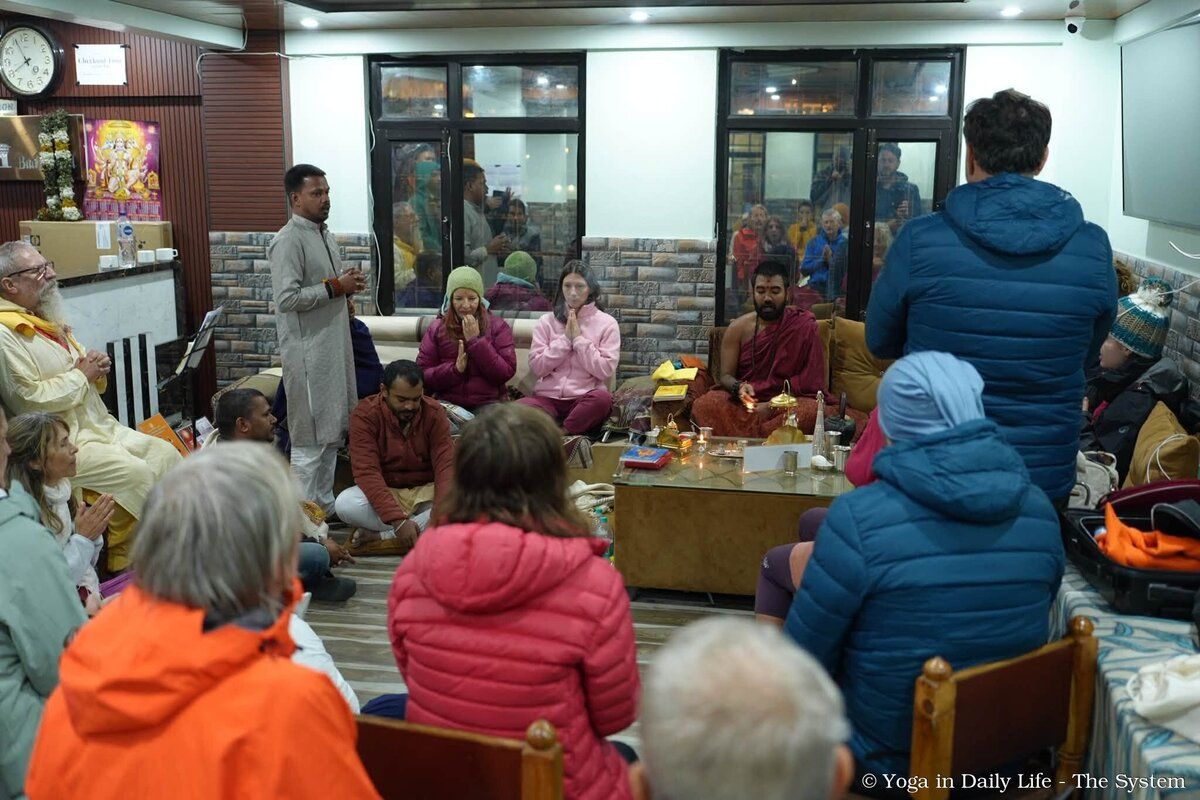
The day concluded with evening puja and satsang, as MM Swami Sri Avatar Puri Ji and the devotees immersed in the sacred atmosphere of Badrinath.
Mana: Following the Sacred Footsteps of the Ancient Sages
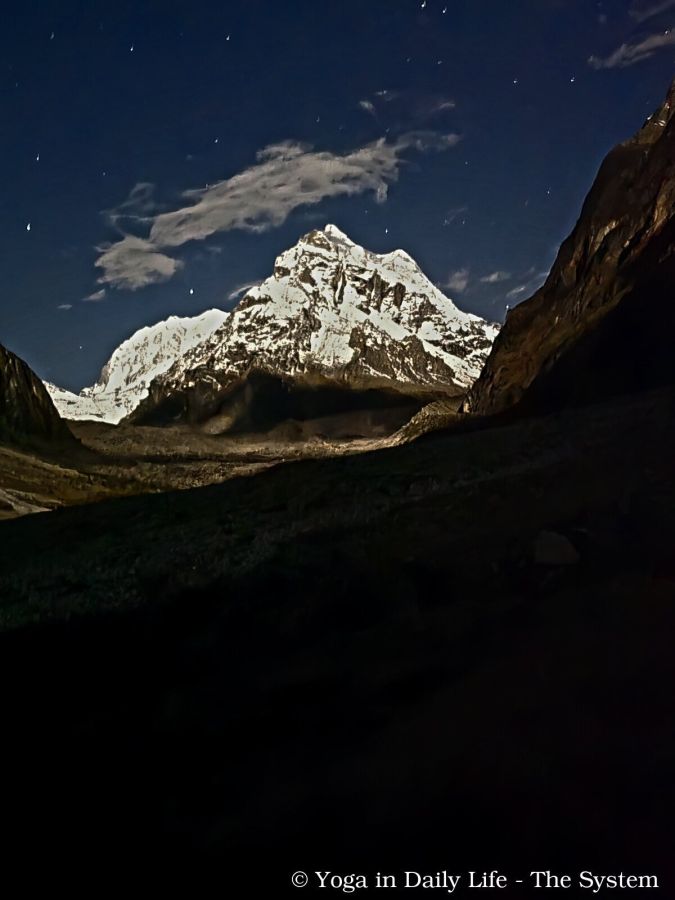
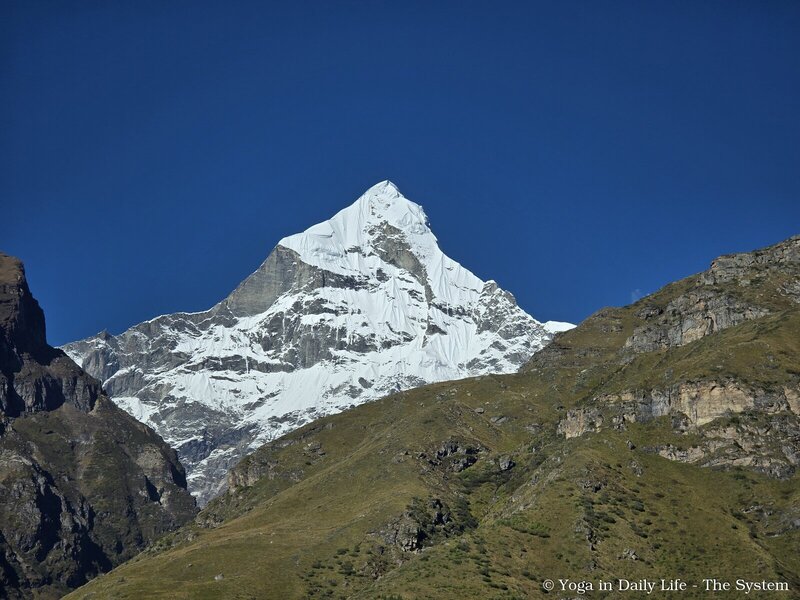
The following morning began with a magnificent view of Neelkanth Peak, rising to approximately 6,597 metres above sea level. At sunrise, the first rays of light illuminate its snow-covered summit, creating one of the most beautiful sights in the Garhwal Himalayas. Neelkanth, meaning "blue throat", is a name associated with God Shiva and the story of his consuming the cosmic poison during the churning of the ocean to protect the world.
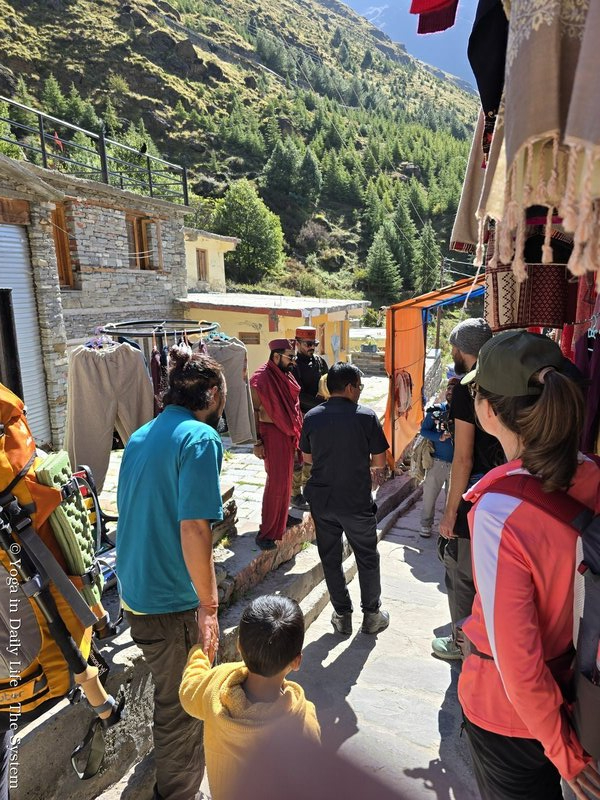
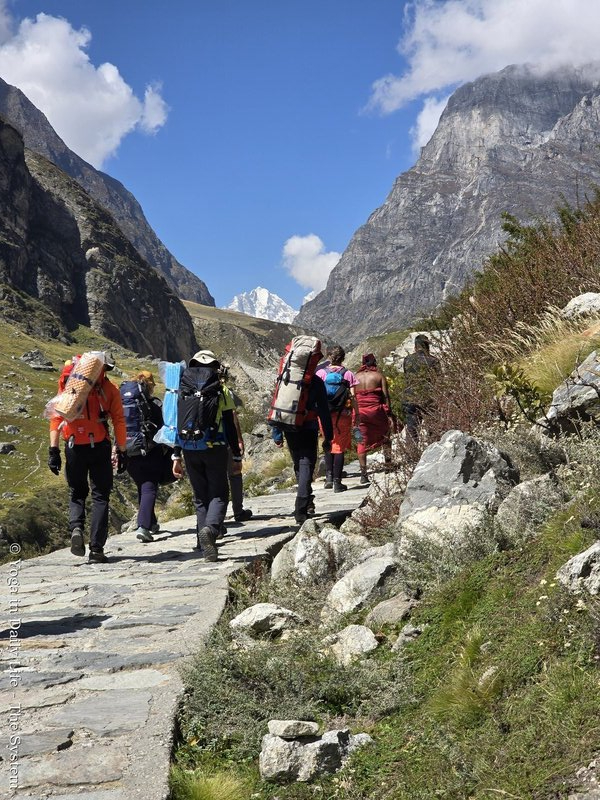
With the blessings of Sri Vishwaguruji, the pilgrimage continued to Mana, a Himalayan village situated at approximately 3,200 metres above sea level. Traditionally known as "India's Last Village", due to its proximity to the Indo-Tibetan border, Mana is surrounded by dramatic mountain landscapes and is deeply connected with the stories of the Mahabharata.
Vyas Gufa and Ganesh Gufa
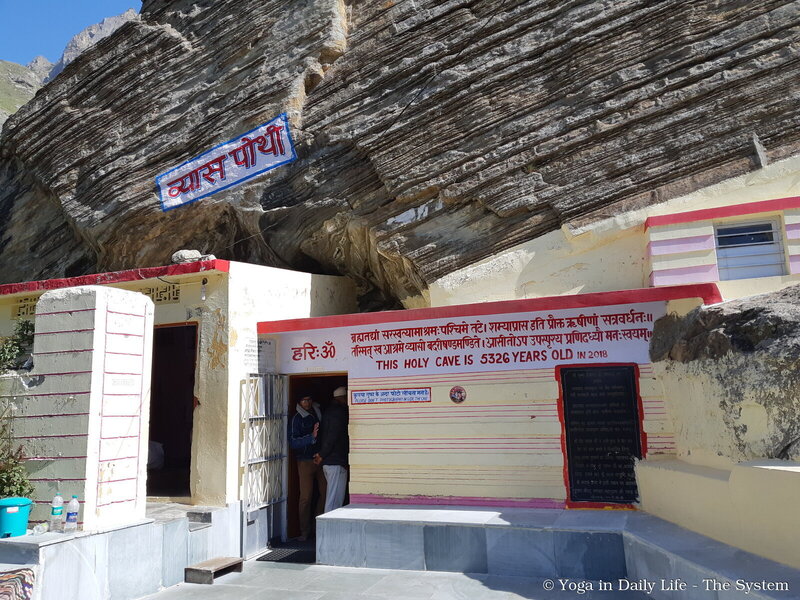
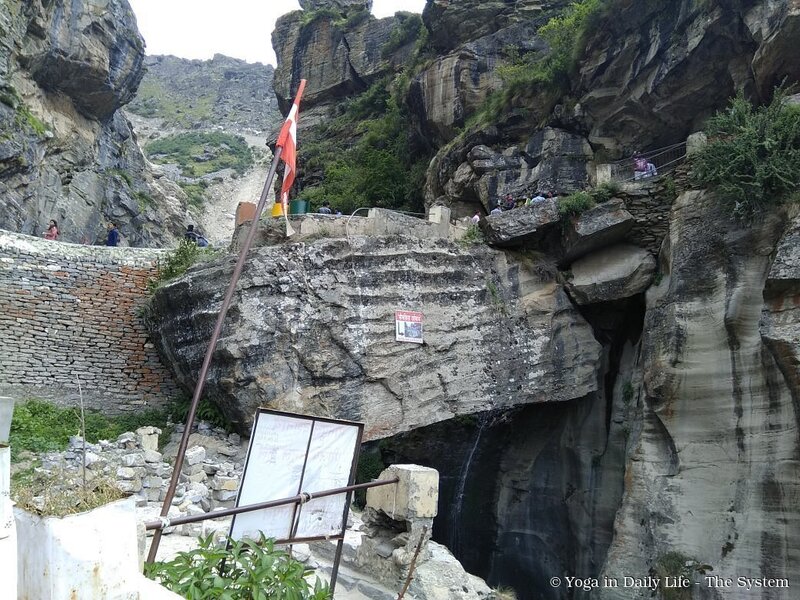
The group next visited Vyas Gufa and Ganesh Gufa, the sacred caves where Maharishi Ved Vyasa composed the Mahabharata with the help of God Ganesha, who served as his scribe. According to the Mahabharata Adiparva (the first book), Maharishi Ved Vyasa wished to compose the Mahabharata, the great epic containing over 100,000 verses. Knowing the enormity of the task, he prayed to God Brahma, who advised him to seek the help of Ganesha, the deity of wisdom and intellect, to serve as his scribe.
Ganesha agreed, on the condition that Maharishi Ved Vyasa dictate the verses continuously without pausing. In return, Vyasa asked that Ganesha understand the meaning of each verse before writing it down. As the dictation proceeded at a rapid pace, Ganesha's quill suddenly broke. Determined to keep his promise without interrupting the flow of the narration, he broke off one of his own tusks and used it as a writing instrument to complete the epic.
The layered appearance of the rock above Vyas Gufa resembles pages placed one above another. It is said that this is that part of the story of the Mahabharata, about which no one knows, except Maharishi Ved Vyas and God Ganesha.
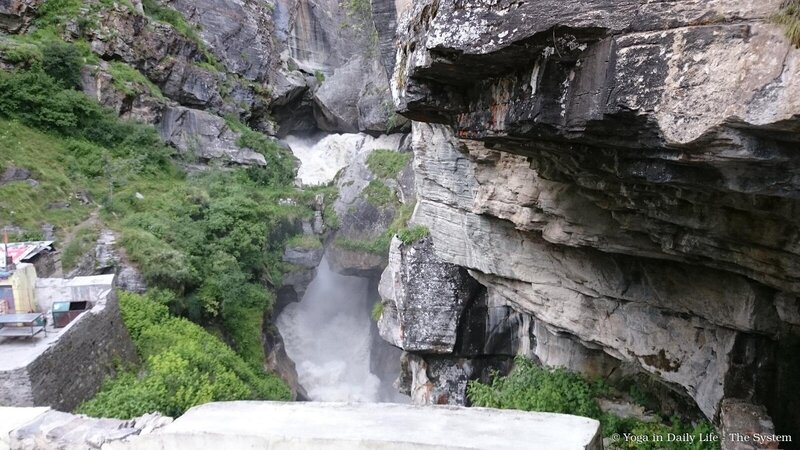
Vishwaguruji once shared a story about the writing of the Mahabharata: As Maharishi Ved Vyasa dictated the epic to God Ganesha, the Saraswati River flowed with such force and noise that it disturbed their concentration. Maharishi requested Saraswati to flow gently, but when she refused, he cursed her to disappear underground. At this very spot, the pilgrims witnessed the Saraswati River disappearing beneath the rocks.
Bheem Pul: A Bridge from the Mahabharata
Passing further, the group saw Bheem Pul, an enormous natural rock spanning the Saraswati River. According to India's spiritual heritage, mighty Bheem, one of the five Pandava brothers, placed the rock across the river to create a bridge for Draupadi as they travelled towards Swargarohini.
Vasudhara Falls: A Place of Natural Beauty and Spiritual Tradition
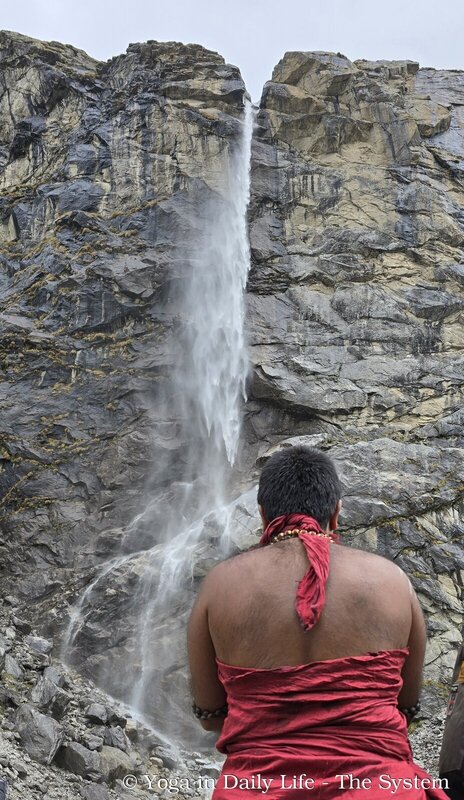
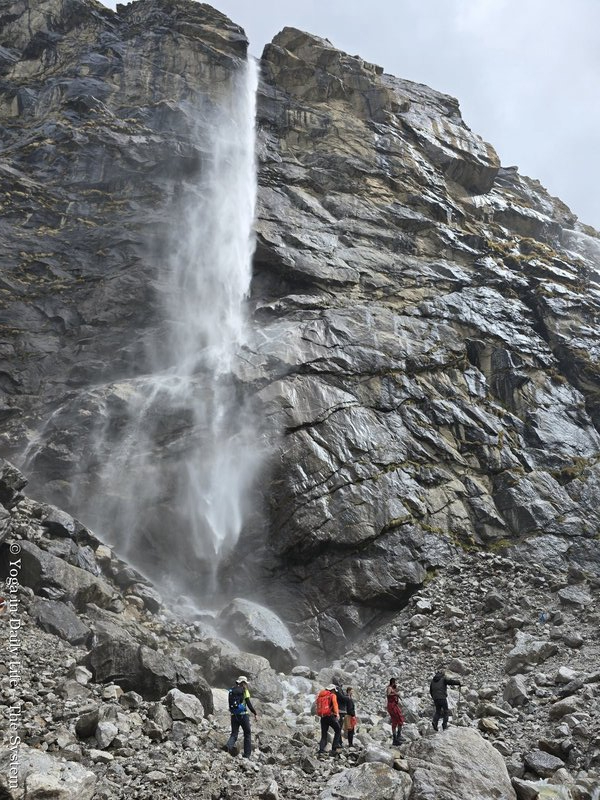
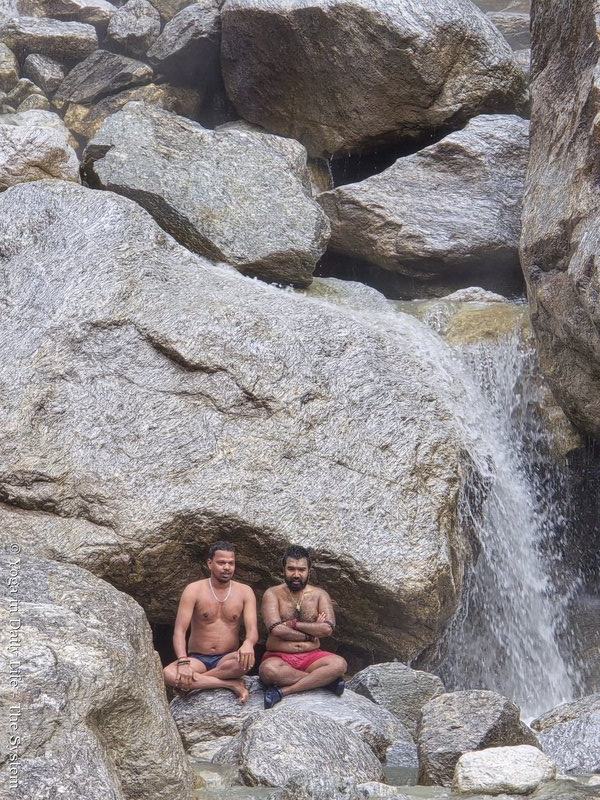
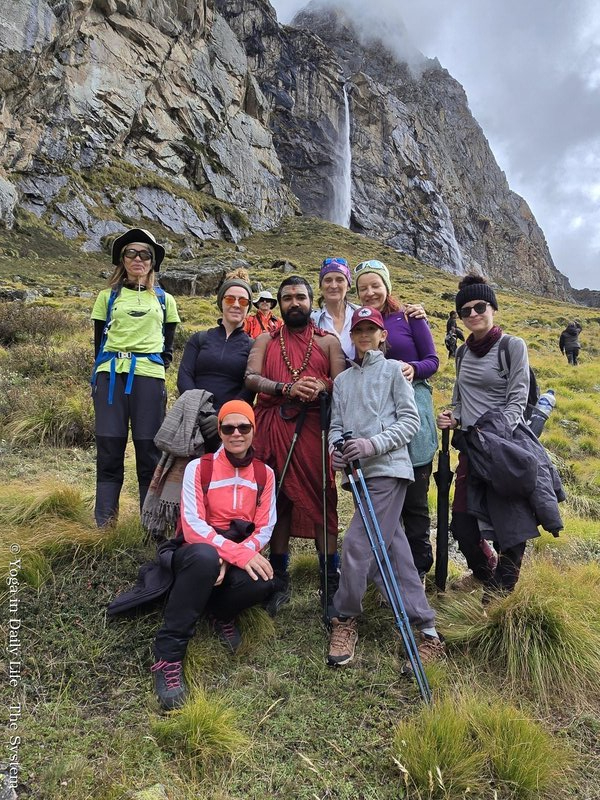
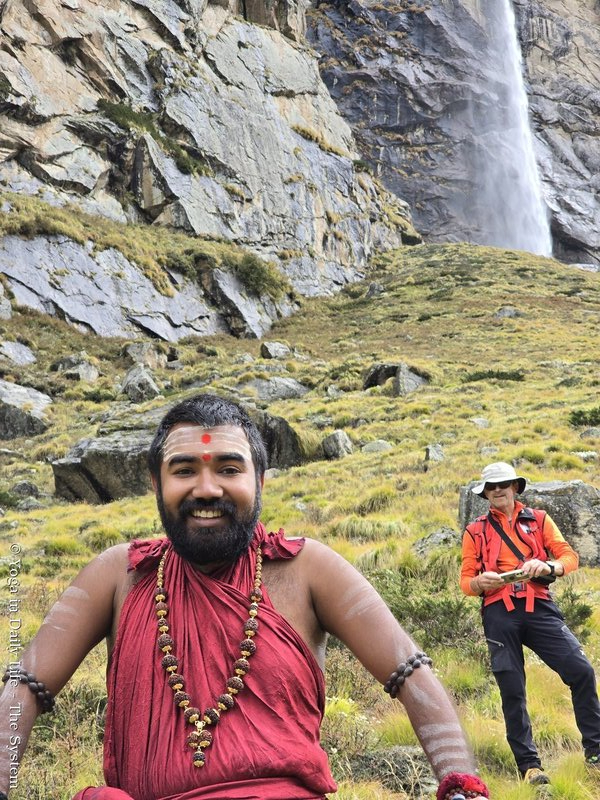
Approximately six kilometres from Mana, the group reached Vasudhara Falls, an impressive waterfall descending from a height of around 120 metres, flowing down into the Alaknanda River.
Surrounded by towering mountains and rugged terrain, Vasudhara is a place of extraordinary natural beauty. It is said that the water does not fall upon those who are spiritually impure, while those touched by its sacred spray are considered blessed. It is considered to have a flavour like nectar because its water has been enriched by Ayurvedic herbs.
According to legend, the Pandavas stopped here on their journey to heaven, and Sahadeva, the youngest Pandava, is believed to have left his mortal body at this site.
Arrival at the Sacred Cave of Sri Alakh Puriji
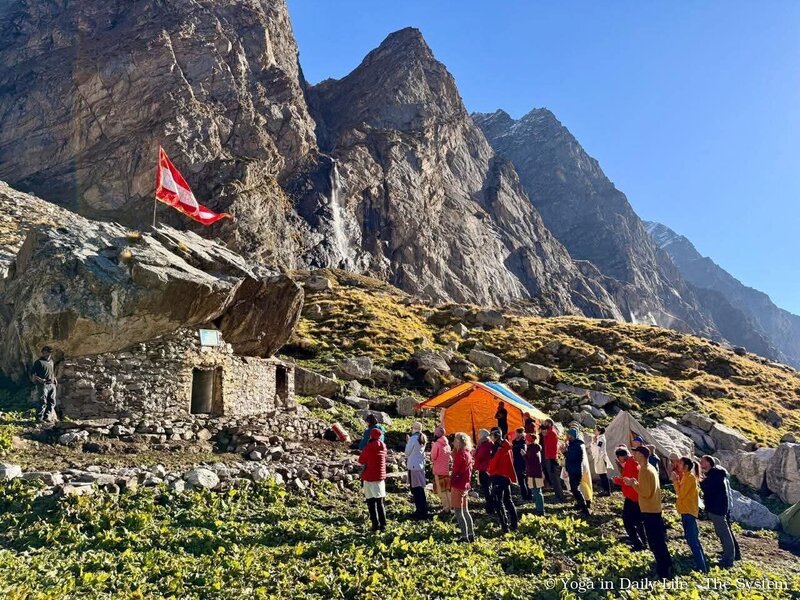
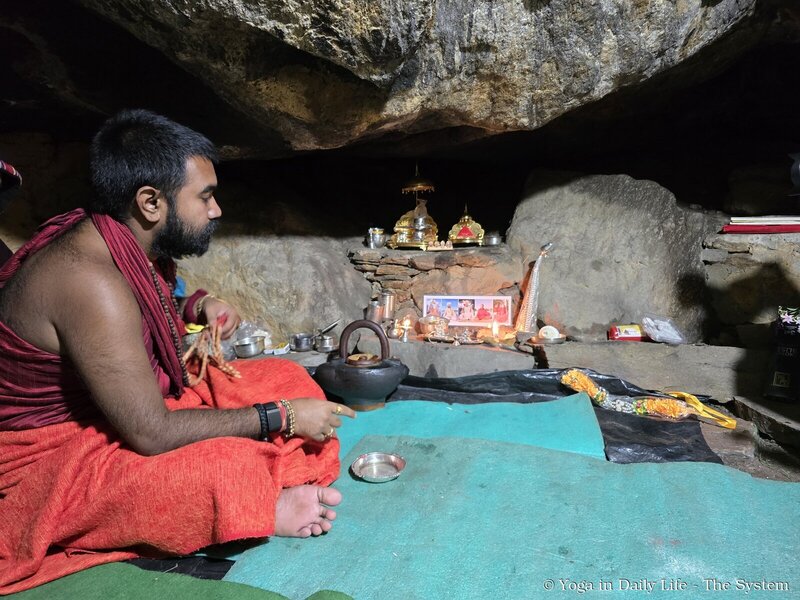
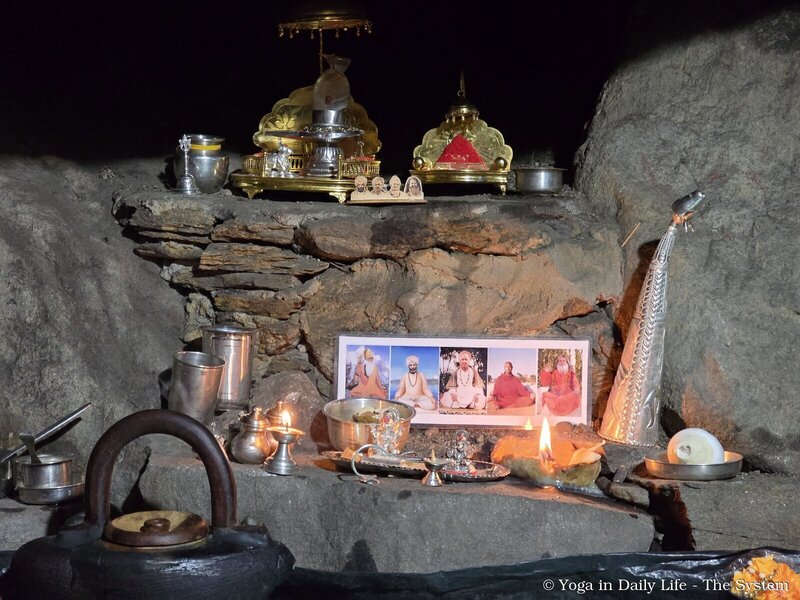
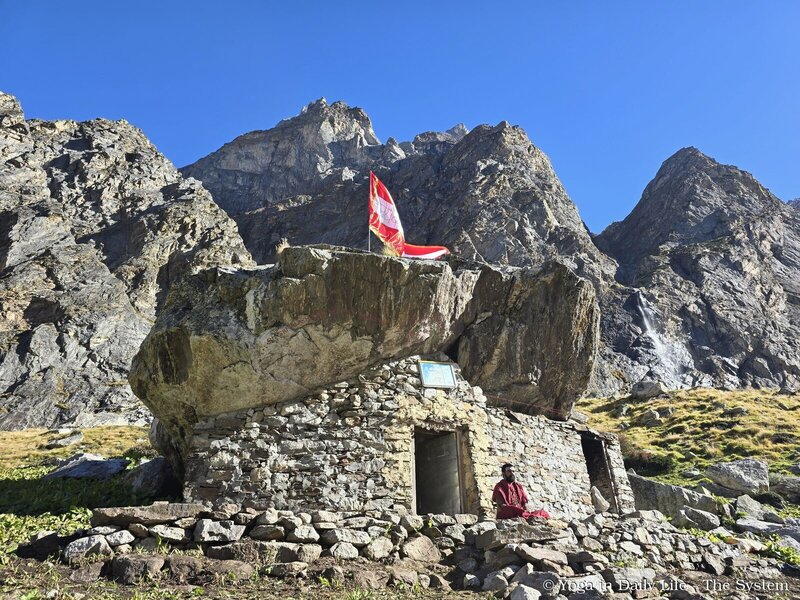
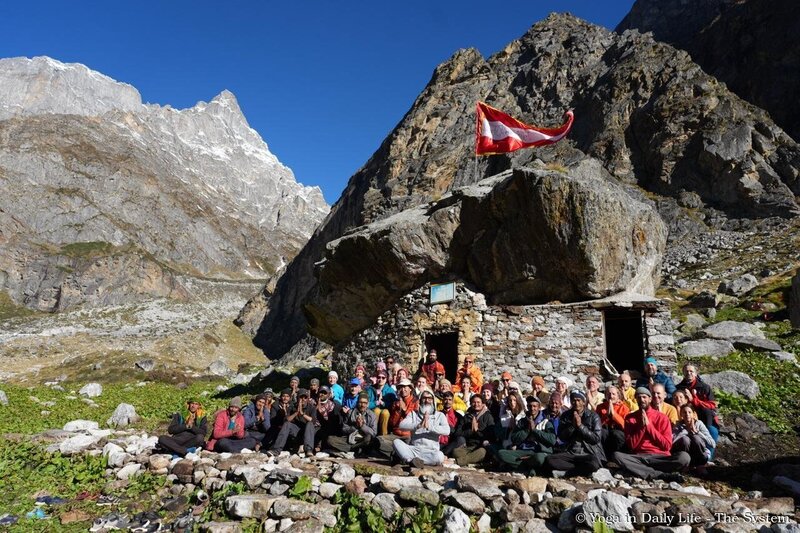
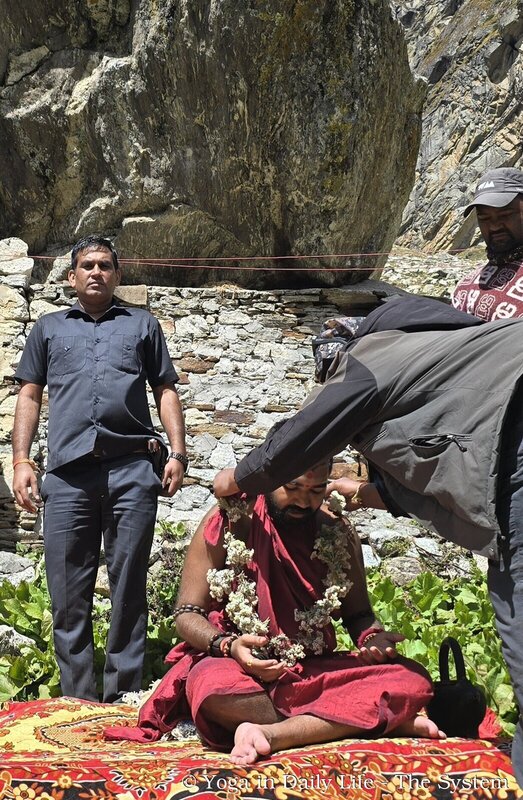
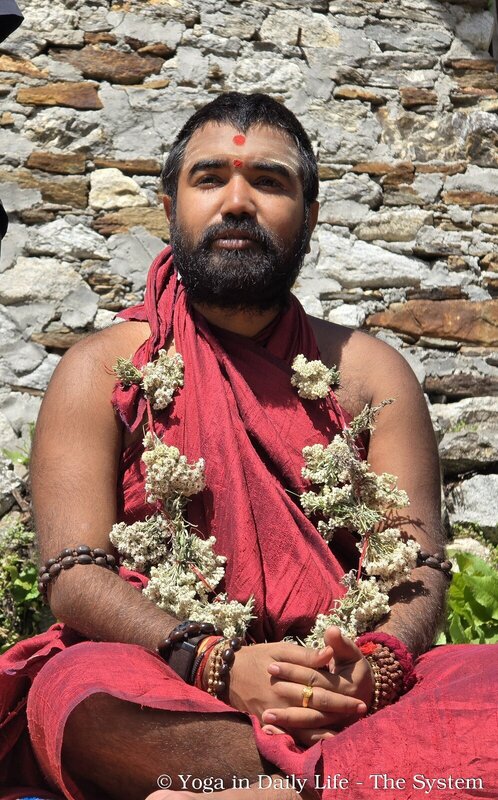
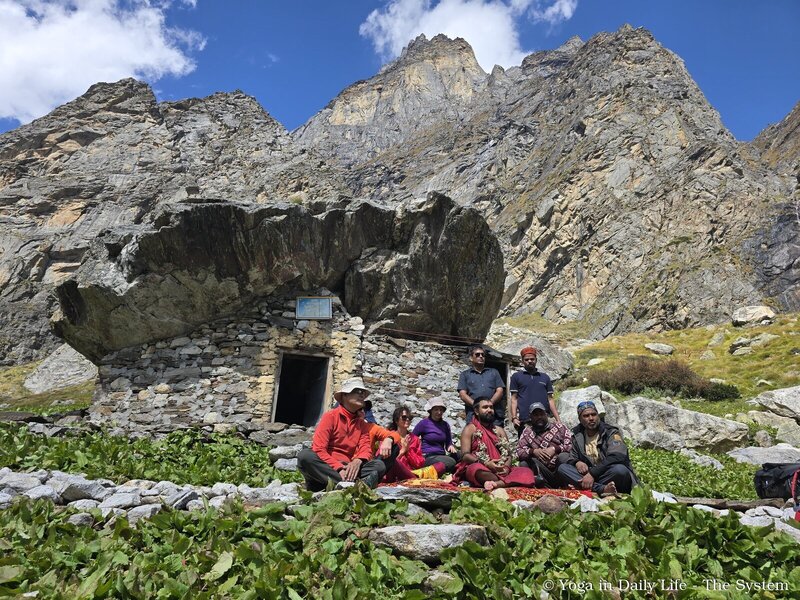
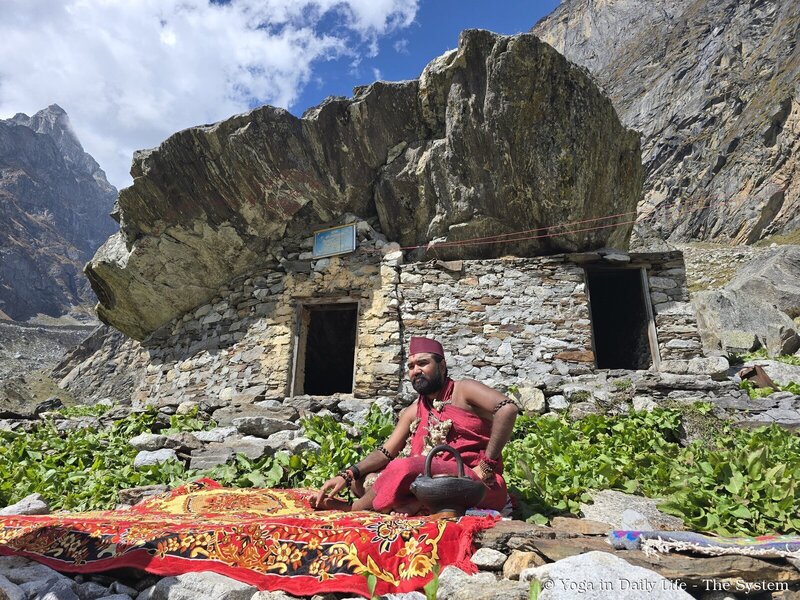
Finally, Param Pujya Mahamandaleshwar Swami Sri Avatar Puri Ji Maharaj and the pilgrimage group reached the sacred cave of Sri Alakhpuriji, the revered source of the Om Sri Alakhpuriji Siddha Peeth Parampara.
This remote Himalayan sanctuary is revered as the sacred abode of Sri Alakhpuriji Maharaj, whom Hindu Dharmsamrat Paramhans Sri Swami Madhavanandaji (Holy Guruji) describes in his book, Lila Amrit as the embodiment of the Omnipresent Supreme Brahman and one of the great rishis or siddhas of Satya Loka:
“In the middle of the inaccessible mountain range of Sambu Panca Atala Akhara, there dwells the Omnipresent Supreme Brahman in the form of the hermit ascetic, Sri Alakhpuriji Maharaj. Sri Alakhpuriji stayed there from time to time with some disciples. He is one of the great rishis or siddhas of the Satya Loka, the supreme cosmic sphere of pure Truth and Reality. The real meaning of alakh is indescribable.”
Days of Sadhana in the Himalayas
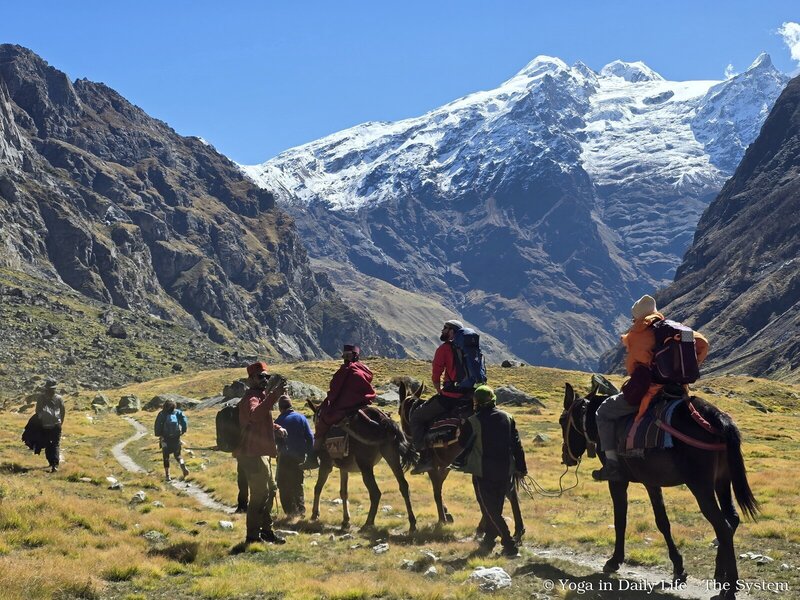
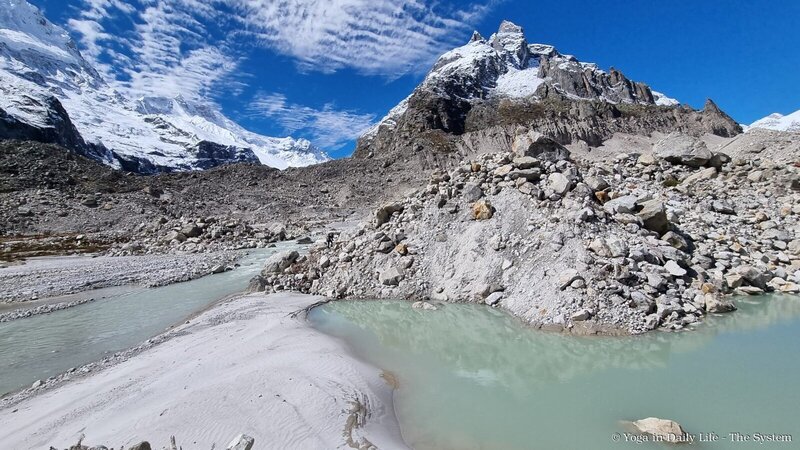
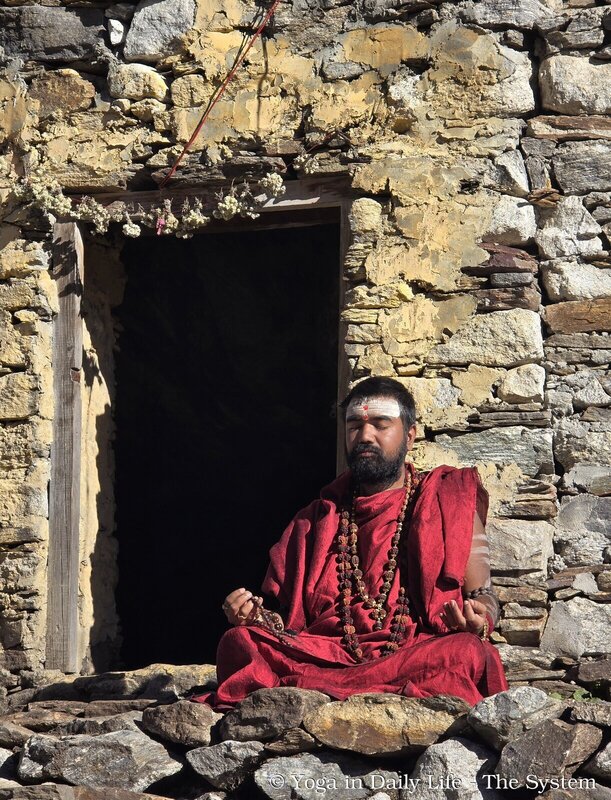
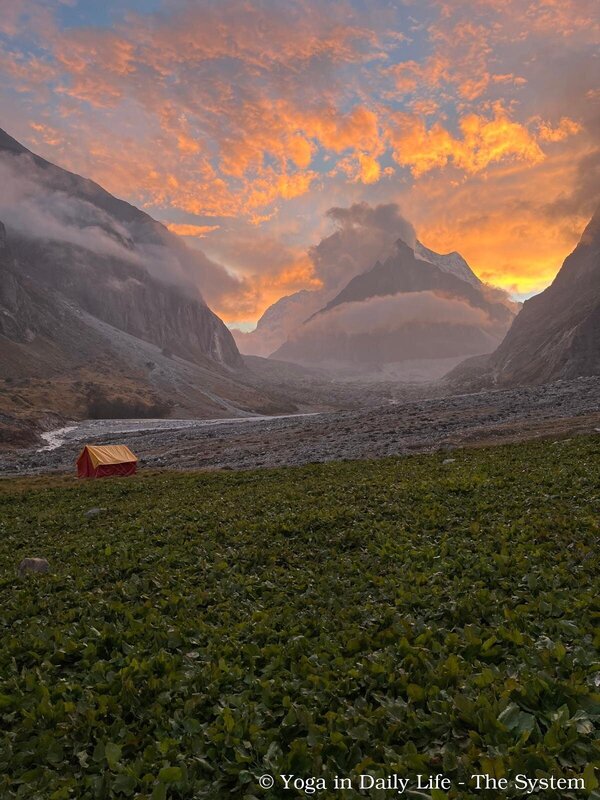
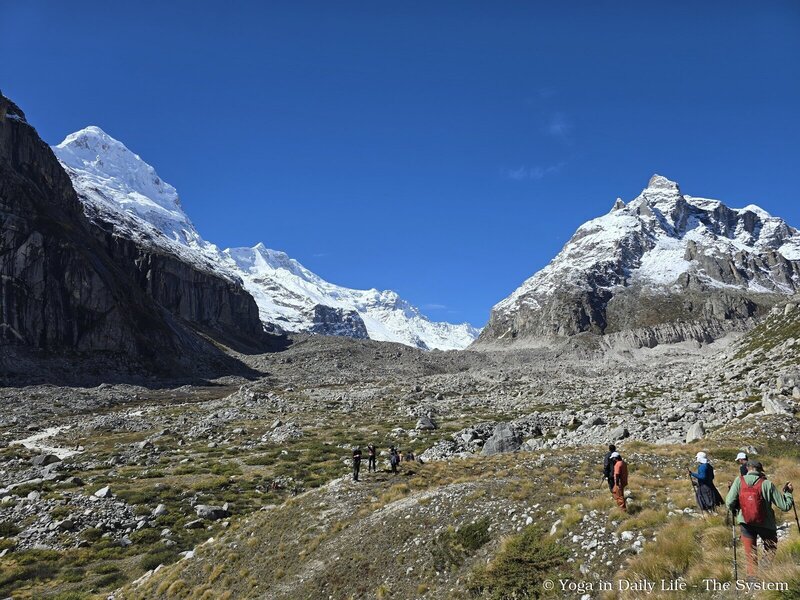
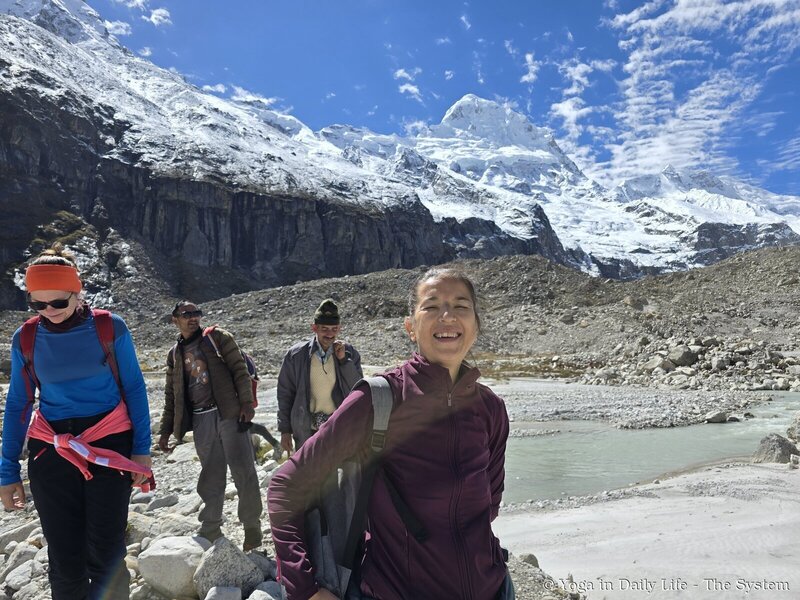
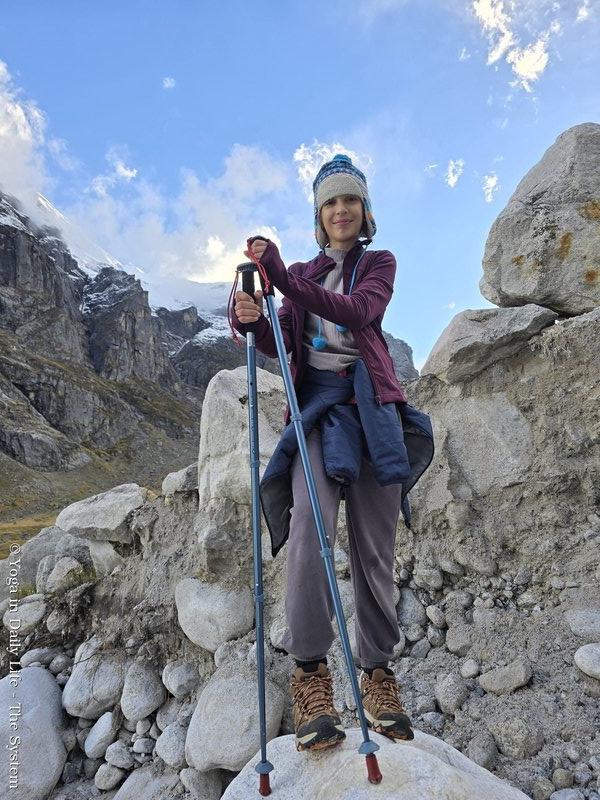
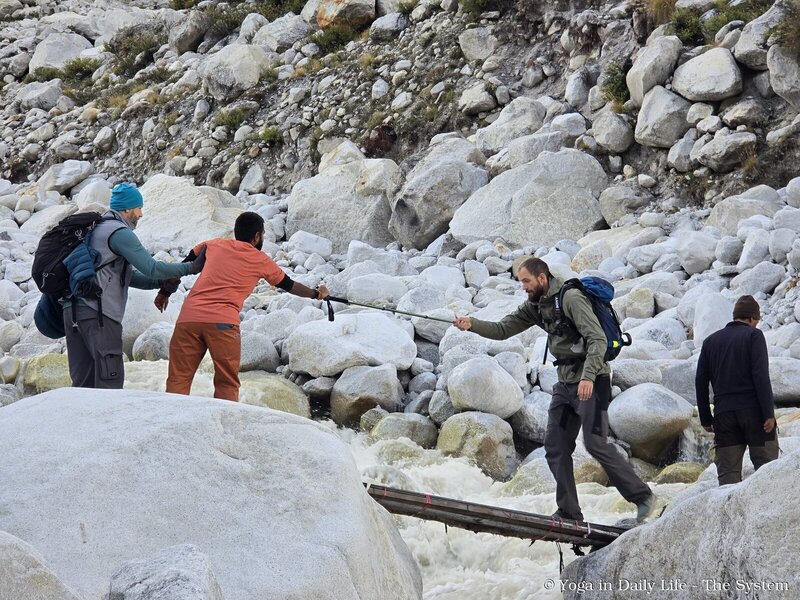
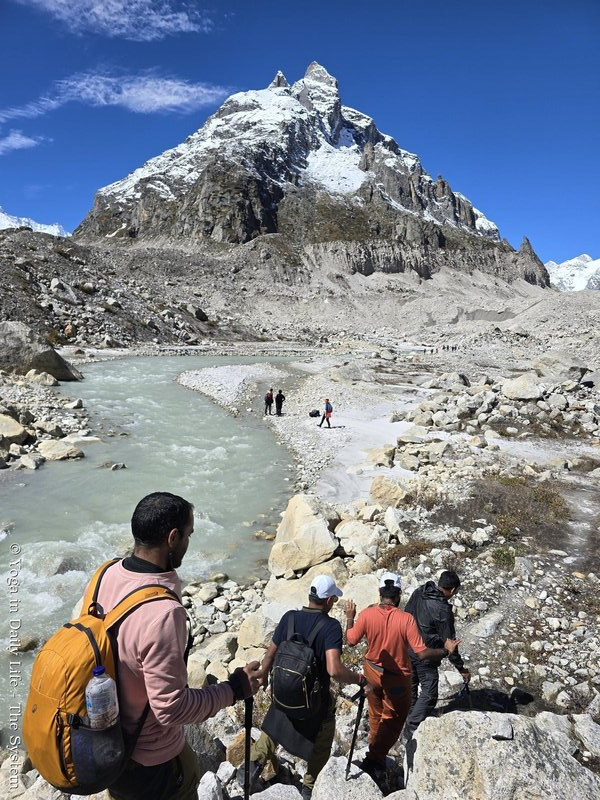
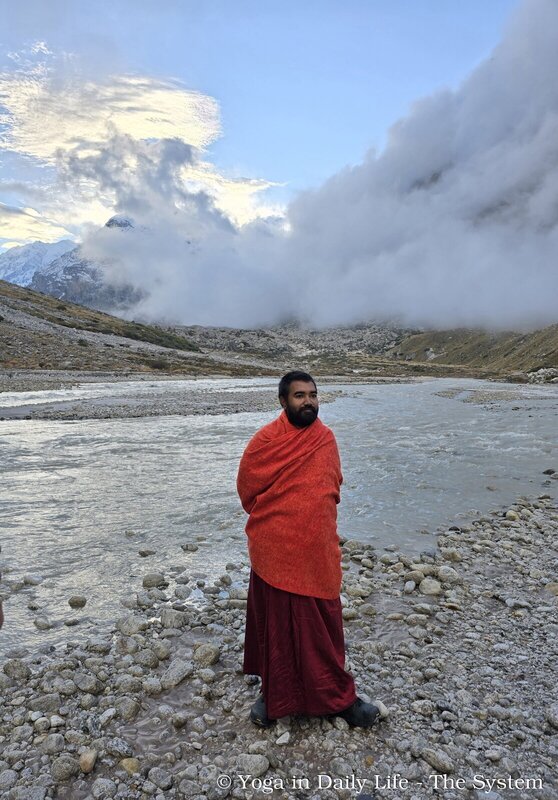
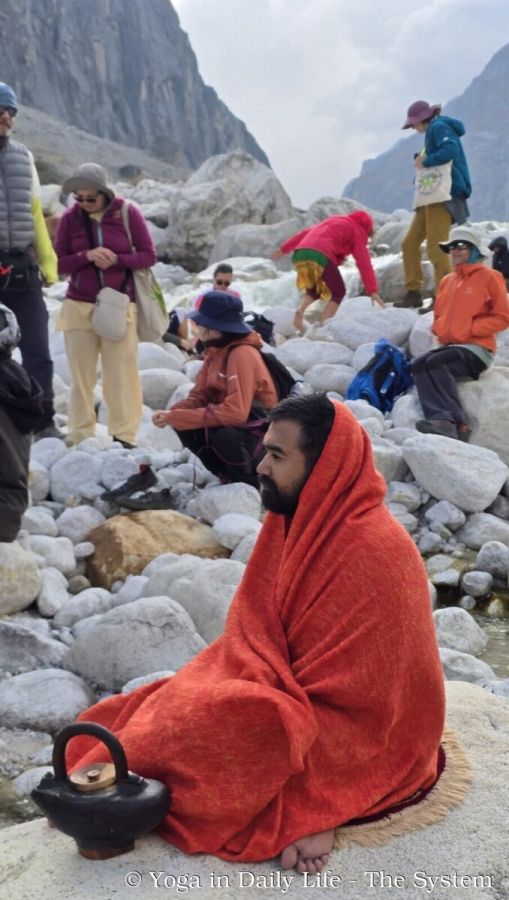
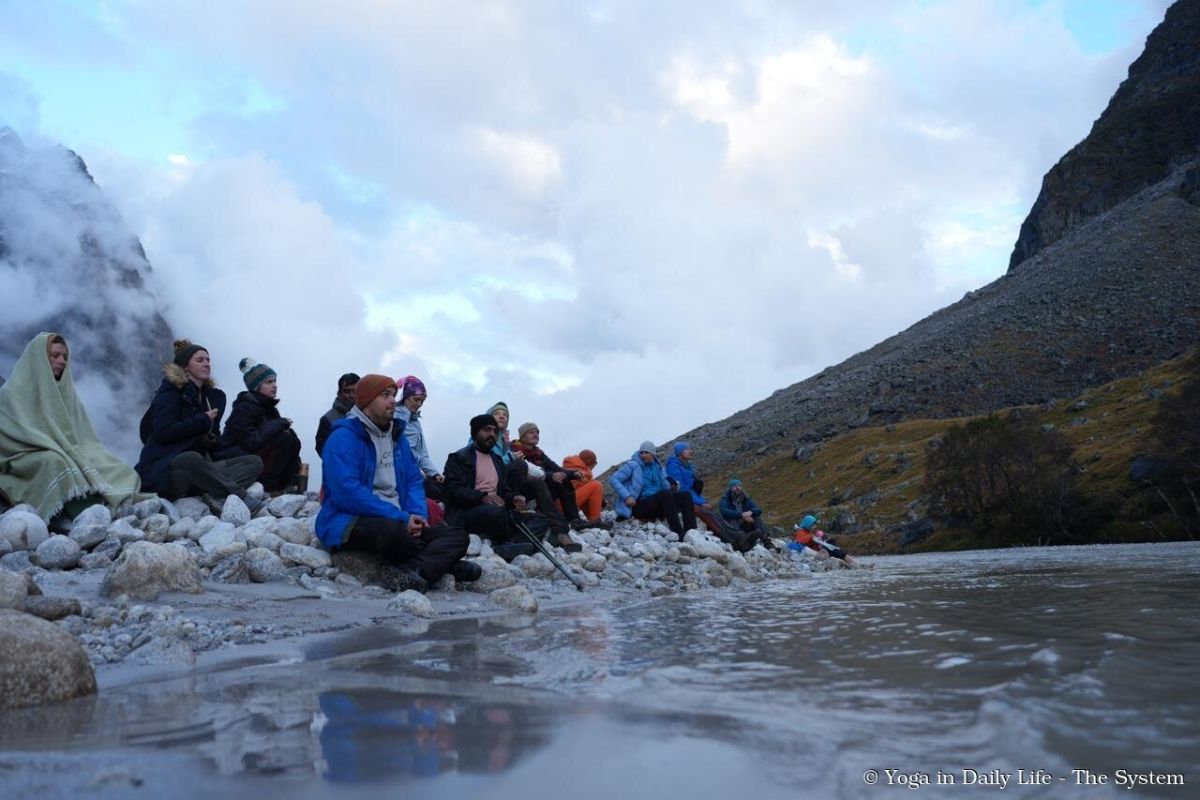
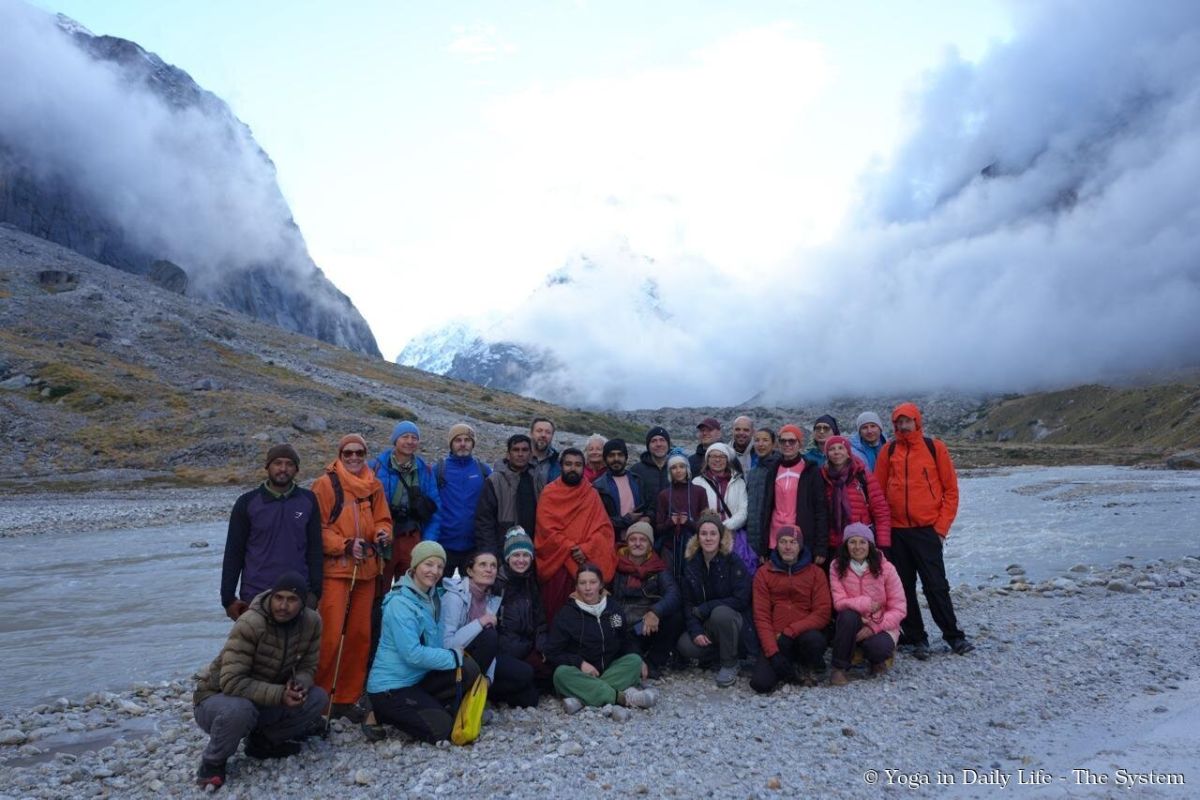
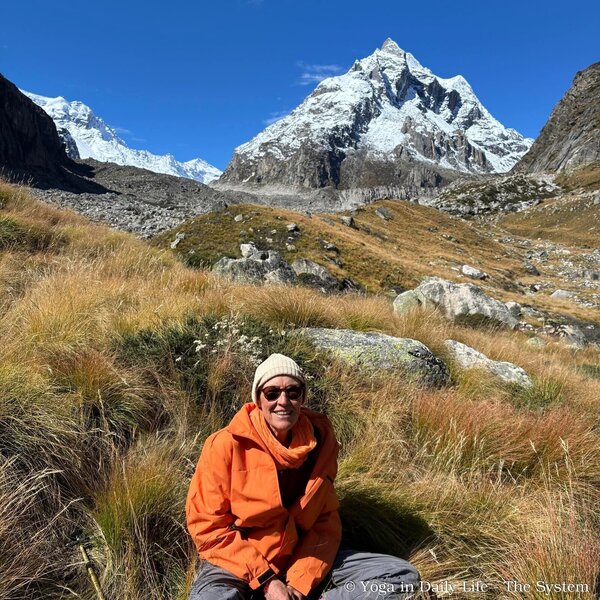
Beneath the sacred cave of Sri Alakhpuriji, the group spent several days immersed in meditation, satsang, prayers and walks to nearby holy places. The days followed a simple rhythm of spiritual practice, contemplation and communion with nature.
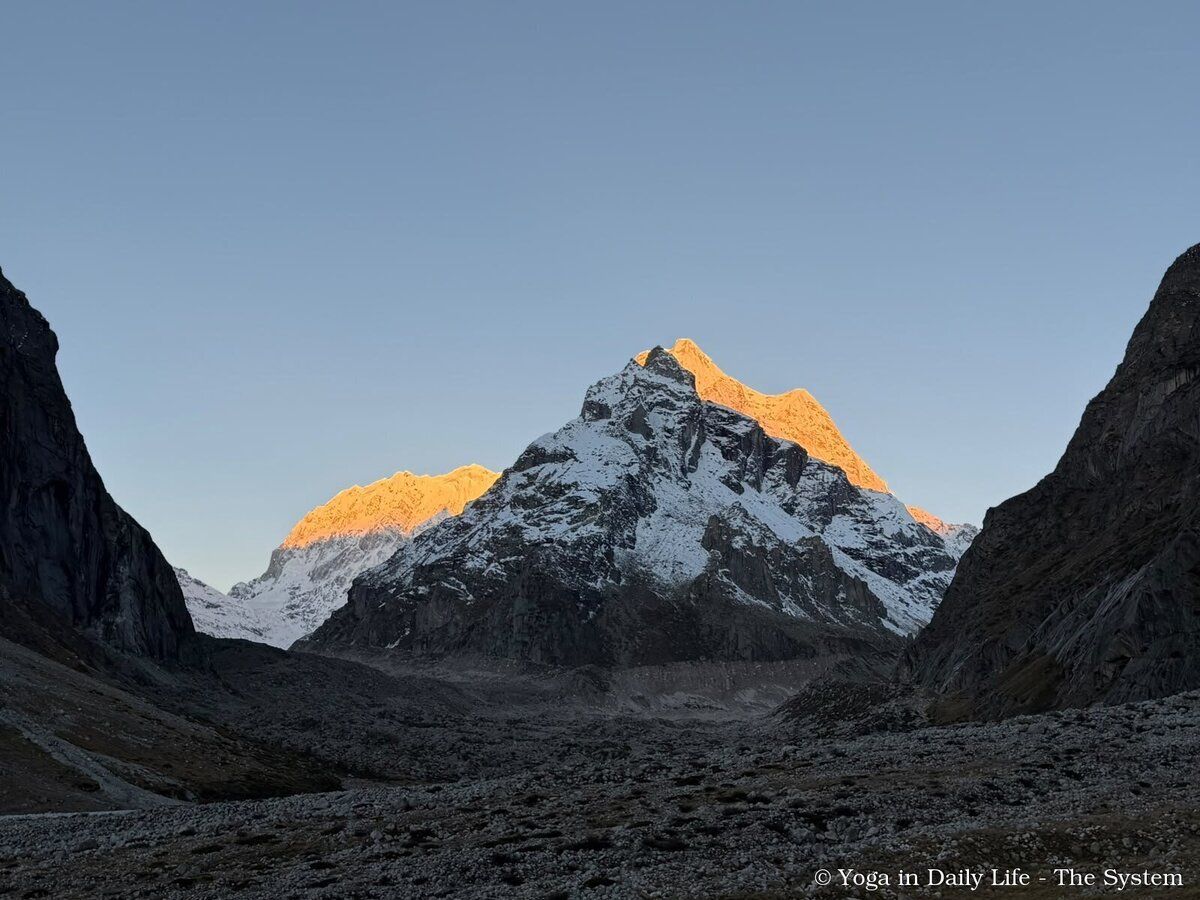
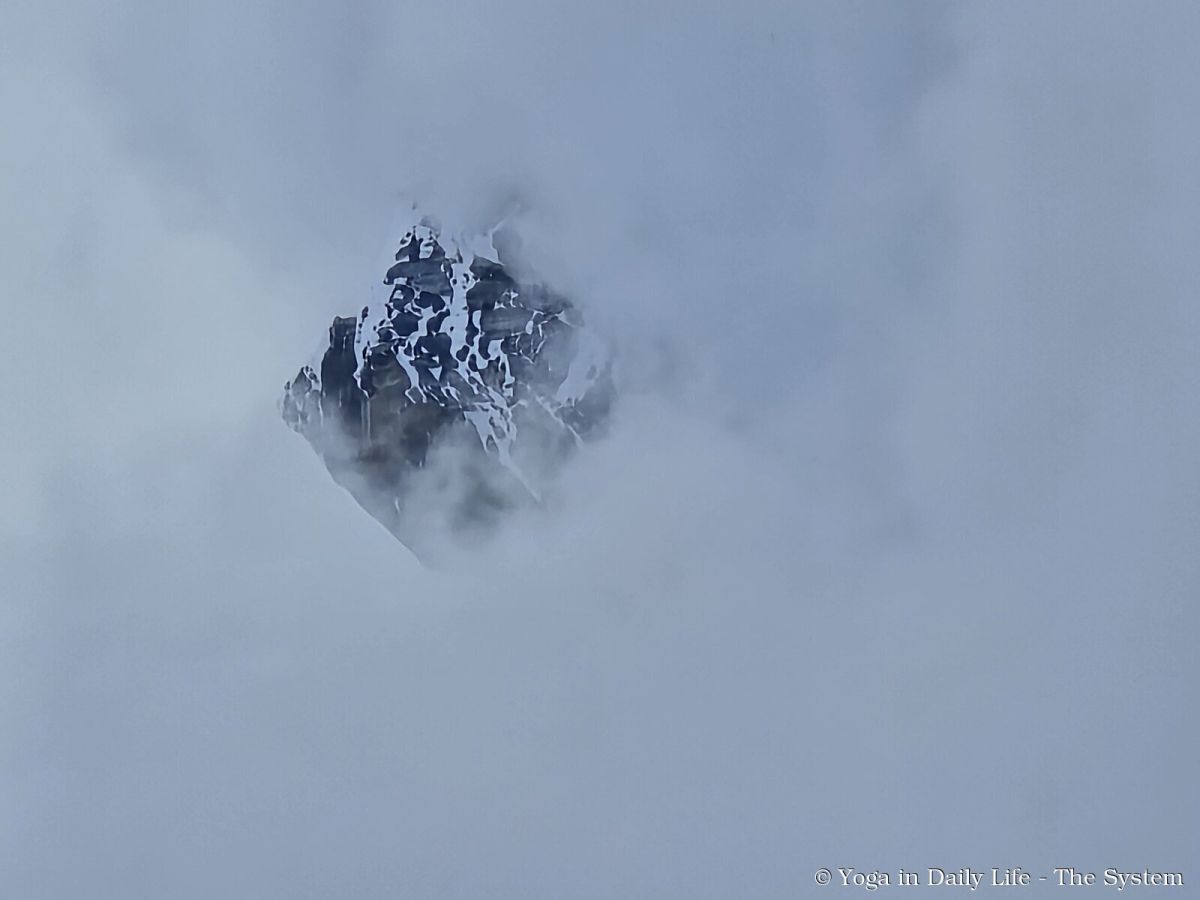
The Himalayan weather was sometimes harsh, with cold temperatures and rain. Yet these conditions became part of the pilgrimage experience, reminding them of the importance of patience, adaptability and gratitude. When the skies cleared and the sun illuminated the surrounding peaks, the beauty of the landscape felt all the more precious.
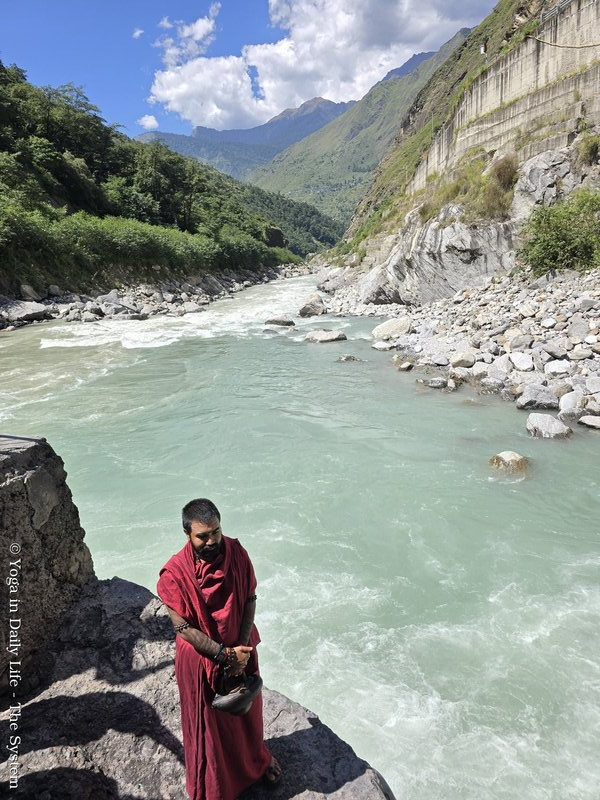
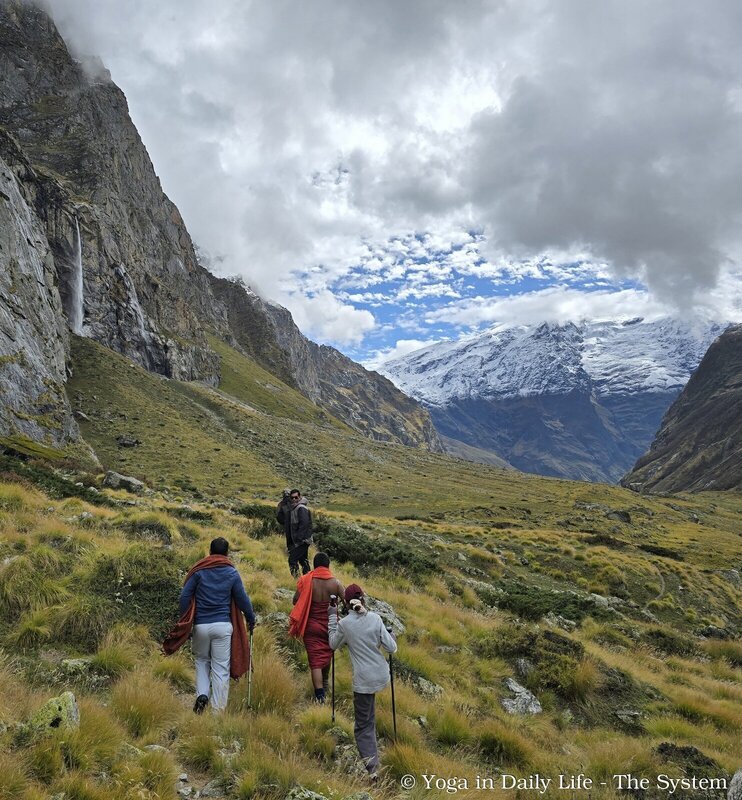
During this time, MM Swami Sri Avatar Puriji and the group walked to Vasudara Falls, Alaknanda River and Laxmi Van, a forested area along the route towards Satopanth Glacier.
In the solitude of the Himalayas, away from the distractions of everyday life, the pilgrims had an opportunity to turn their attention inward, deepen their spiritual practice and reflect on the teachings of their beloved Gurudev, Sri Vishwaguruji.
A Sacred Initiation at Sri Alakhpuriji Cave
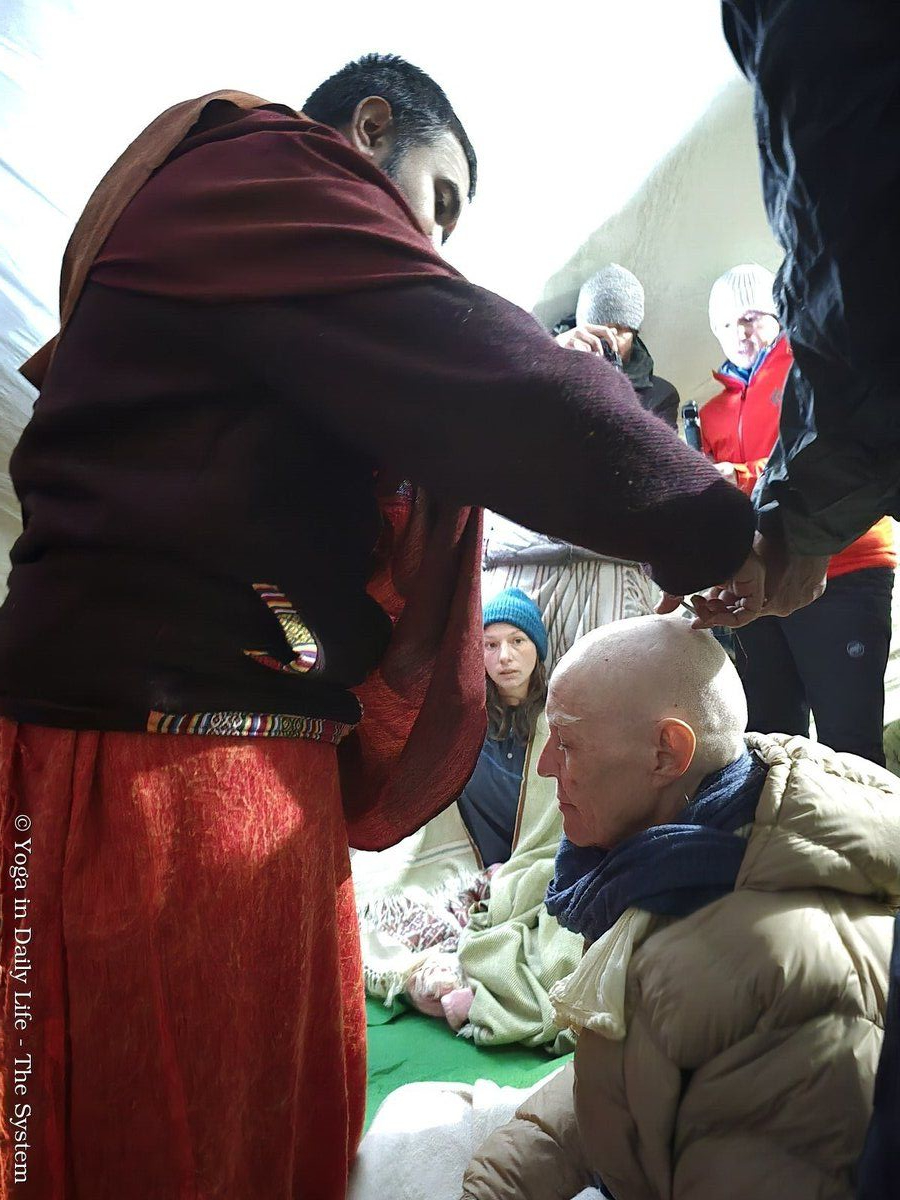
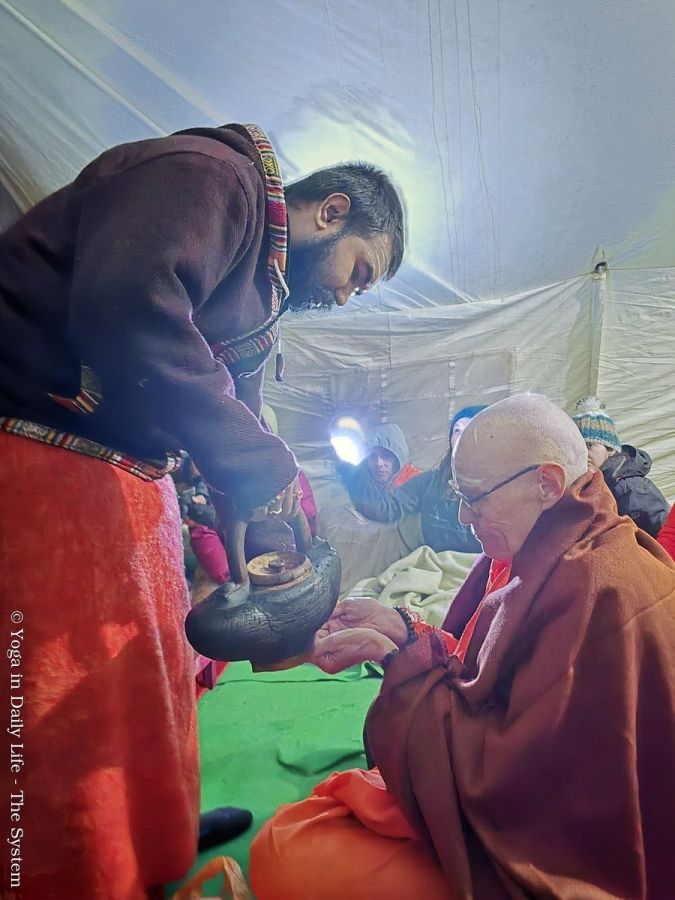
At this sacred place, Priti from Australia, a long-time disciple of Sri Vishwaguruji who currently resides at OM Ashram, received the blessing of sannyas diksha from Mahamandaleshwar Swami Sri Avatar Puri Ji. With this sacred initiation, she received her new spiritual name, Swami Purnanand Mayi Puri, marking an important milestone on her spiritual journey.
The Wisdom of the Himalayas: A Teaching on Humility
Reflecting on his journey through the sacred Himalayan mountains, Mahamandaleshwar Swami Sri Avatar Puri Ji shared these inspiring words:
“In front of the majestic Himalayas, you cannot walk with your chest high, with pride, with ego. Walk ahead, and you will fall. You always have to look down. Be humble, be observing, be aware and then your trip will be peaceful.
That is not only about the Himalayas, that is also about our day-to-day life. That is the greatest trait that we can learn from our beloved Gurudev – simplicity, humbleness, being understanding towards every single creature.”
These words express a profound lesson. The Himalayas remind us that true strength does not come from pride, but from humility, awareness and respect. Just as a traveller must remain attentive to each step along a mountain path, we must approach everyday life with care, patience and understanding.
A Journey of Devotion, Remembrance and Inner Discovery
The pilgrimage to the sacred cave of Sri Alakhpuriji brought the group closer to the places, stories and spiritual traditions that form the foundation of the Om Sri Alakhpuriji Siddha Peeth Parampara.
From prayers beside Mother Ganga and darshan at Badrinath Dham, to the ancient caves of Mana and the divine sanctuary of Sri Alakh Puriji, every stage of the journey offered a reminder of the enduring connection between nature, spiritual practice and the wisdom of the great masters.
Under the blessings of Sri Vishwaguruji and guided by Mahamandaleshwar Swami Sri Avatar Puri Ji, the pilgrims returned with cherished memories and a renewed appreciation of the path of yoga.
The greatest treasure of such a pilgrimage is not only the sacred places one visits, but the understanding one carries home: that humility, awareness, devotion and love for all living beings are essential companions on the spiritual journey.